IFSC Bachelor Thesis: ENCY CAM in a Dual-Robot WAAM Cell





Bachelor thesis: ENCY CAM driving a dual-robot WAAM cell
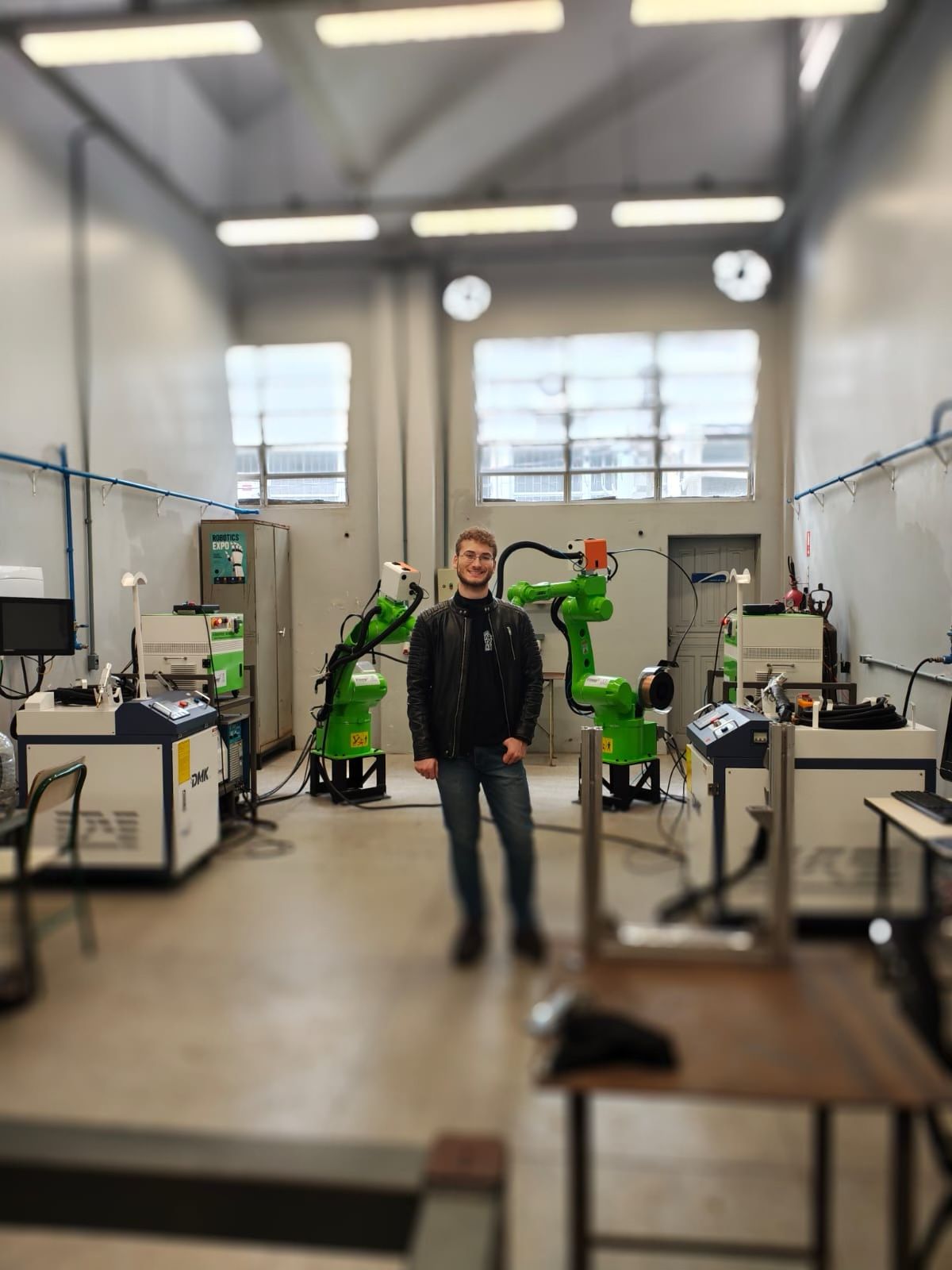
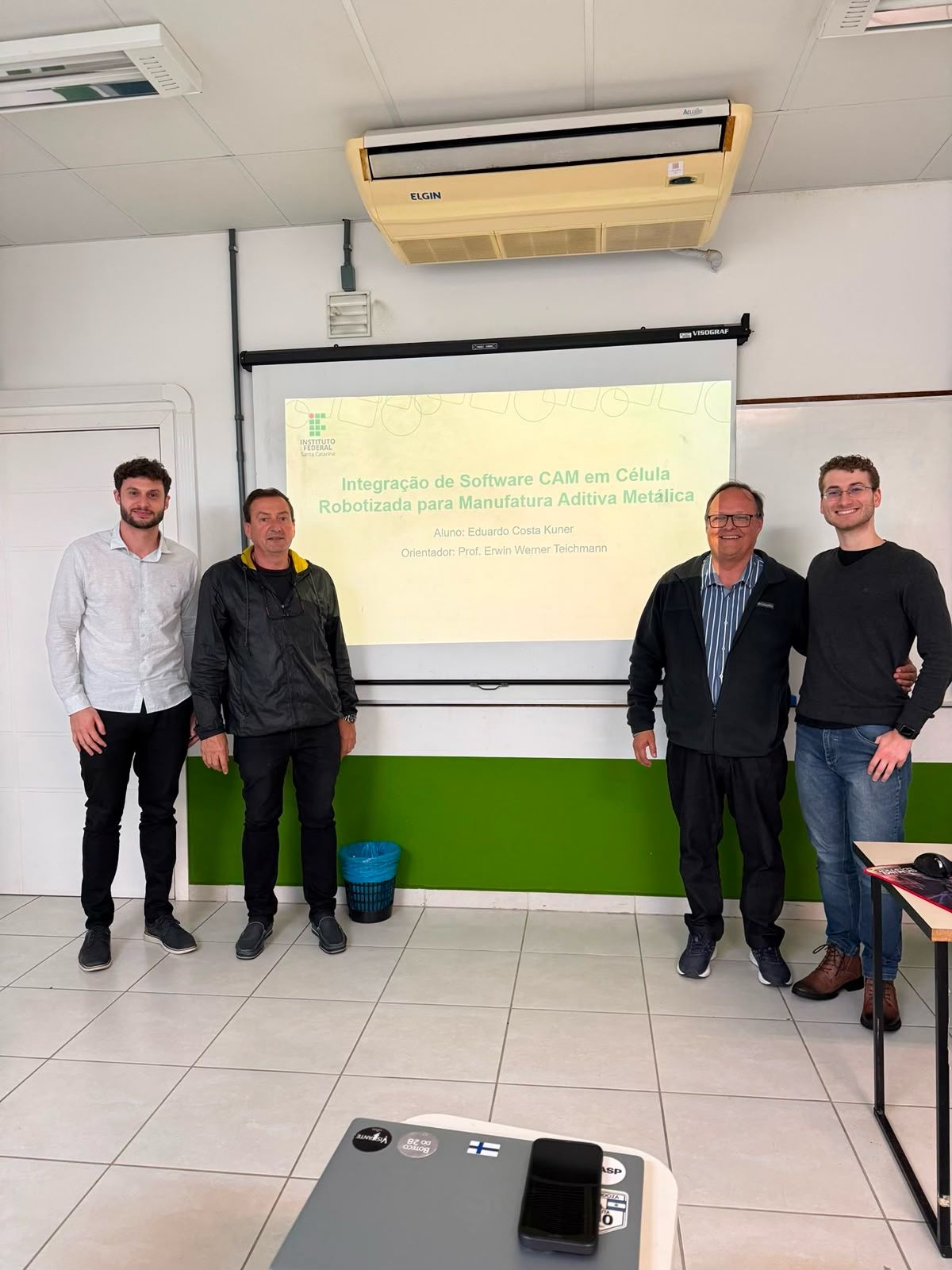
Eduardo Costa Kuner, a Mechatronics Engineering student at the Instituto Federal de Santa Catarina (IFSC) in Brazil, defended a bachelor's thesis titled "Integration of CAM Software into a Robotic Cell for Metal Additive Manufacturing". The project integrated ENCY CAM software into a manufacturing cell built around two low-cost LBBBD 6-axis industrial robots, producing complex parts through Wire Arc Additive Manufacturing (WAAM).
Cooperative dual-robot setup with substrate reorientation
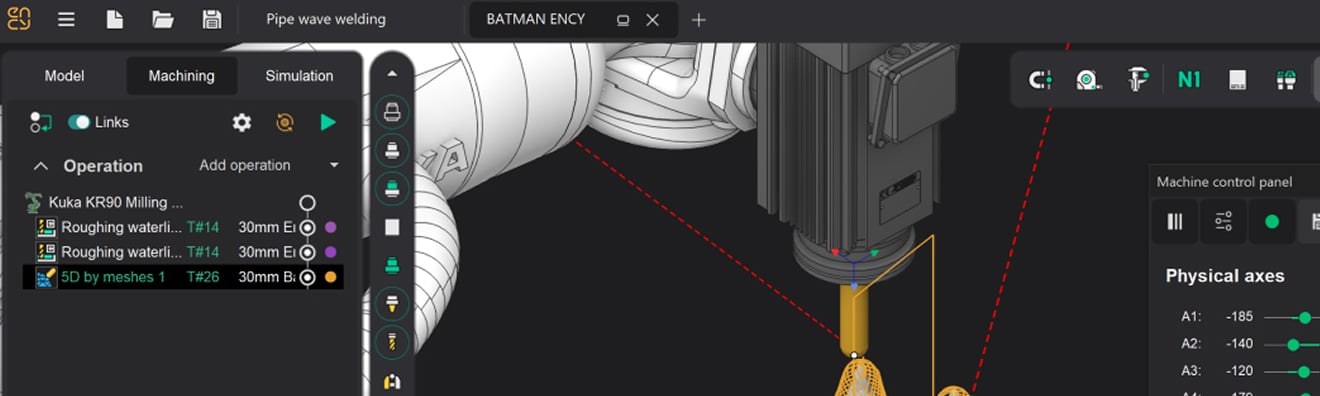
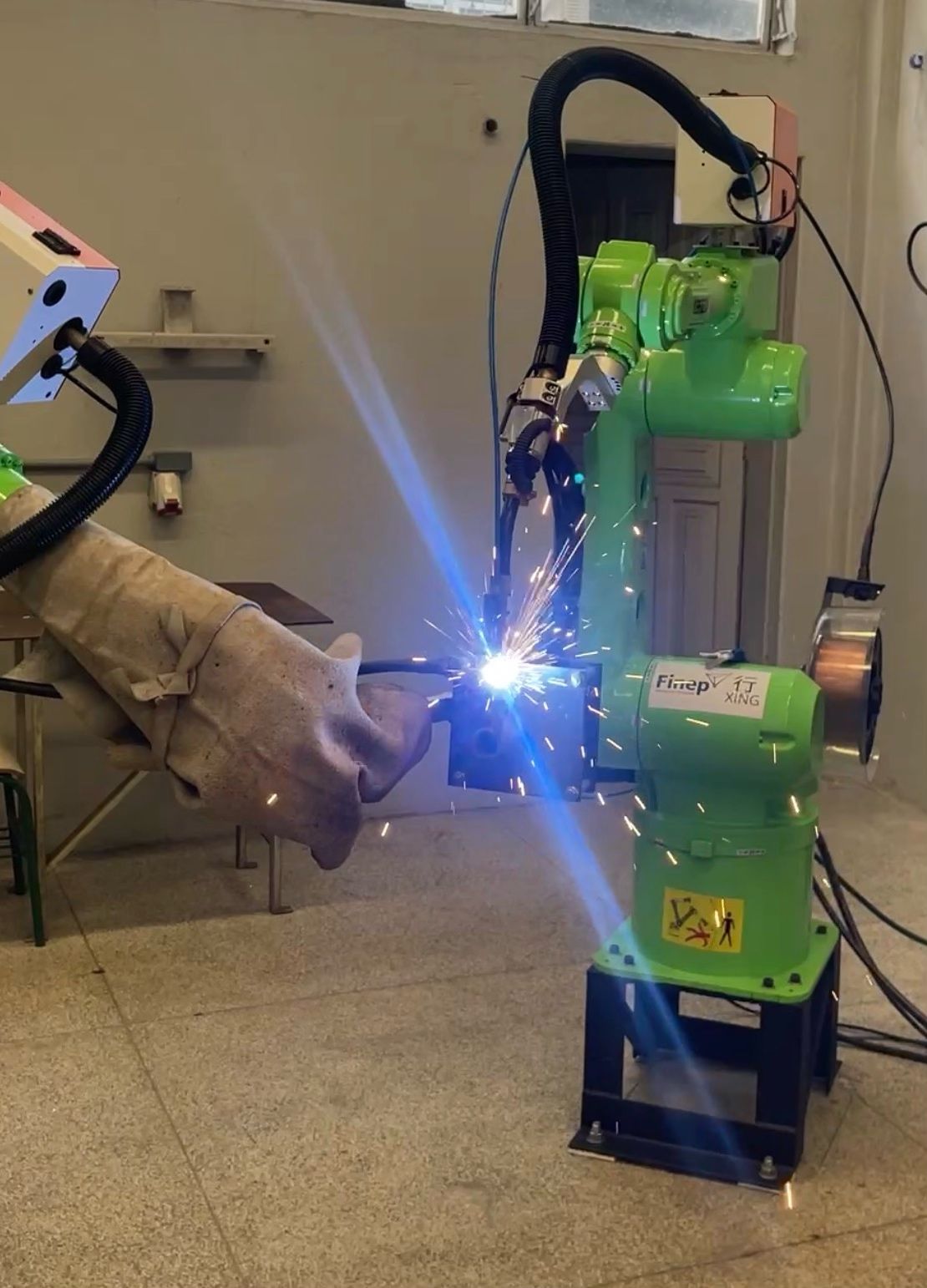
The cell runs a cooperative workflow: one robot reorients the substrate while the other performs material deposition with a MIG/MAG welding torch. Eduardo modeled and validated the kinematics of both robots and determined their relative positioning in the cell, building a virtual environment that matches the physical hardware.
Custom post-processor and controller-binary compiler
On the software side, the project developed a custom post-processor that translates the simulated operations from ENCY CAM into the controller's syntax, together with a Python script that compiles those programs into the binary format the robot controllers require. On the hardware side, a mounting structure was designed to integrate an IFSC-patented compressed-air cooling system that reduces interpass temperature; the cooling system is triggered by a digital output driven directly from the post-processor.
Experimental validation with prismatic and helical parts
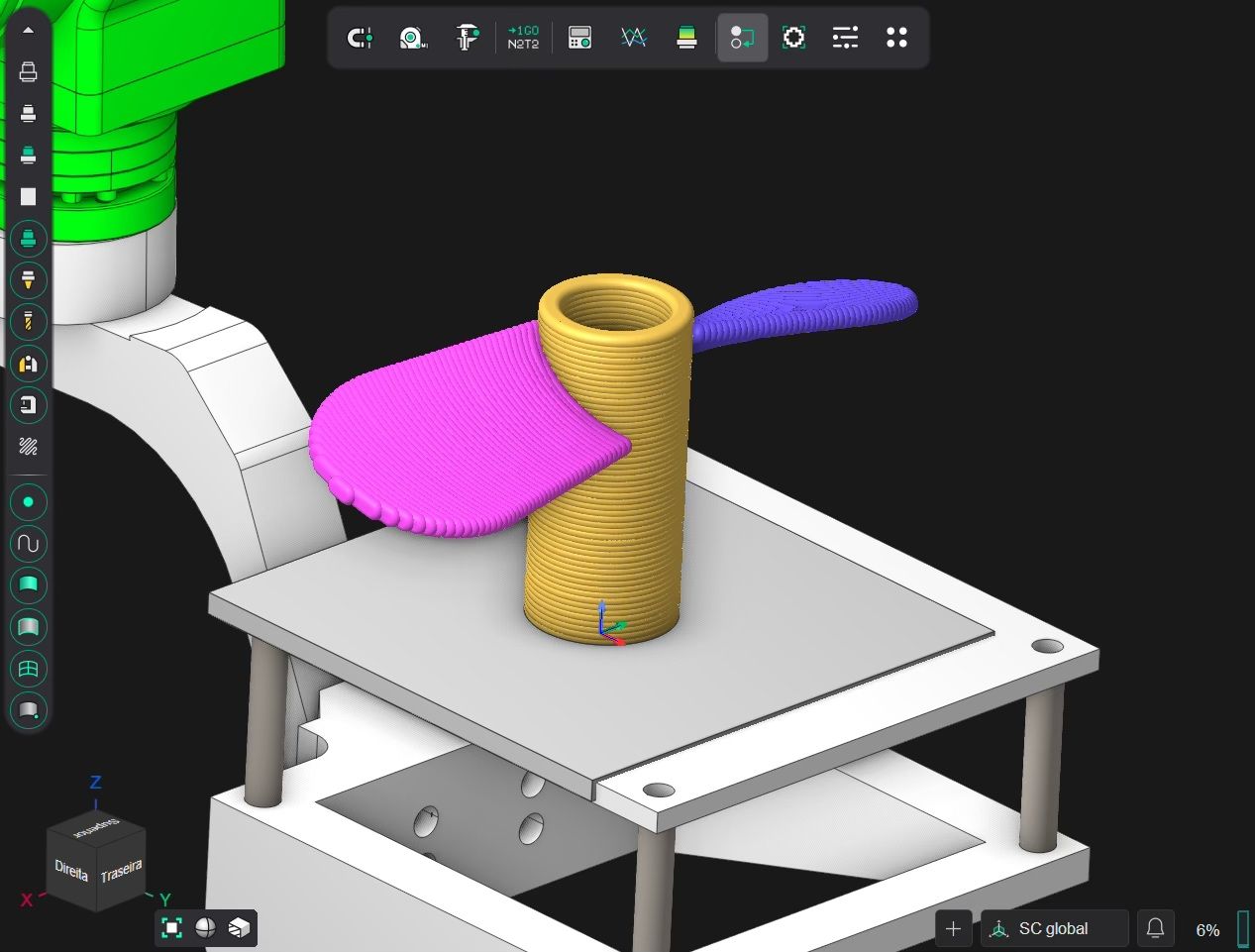
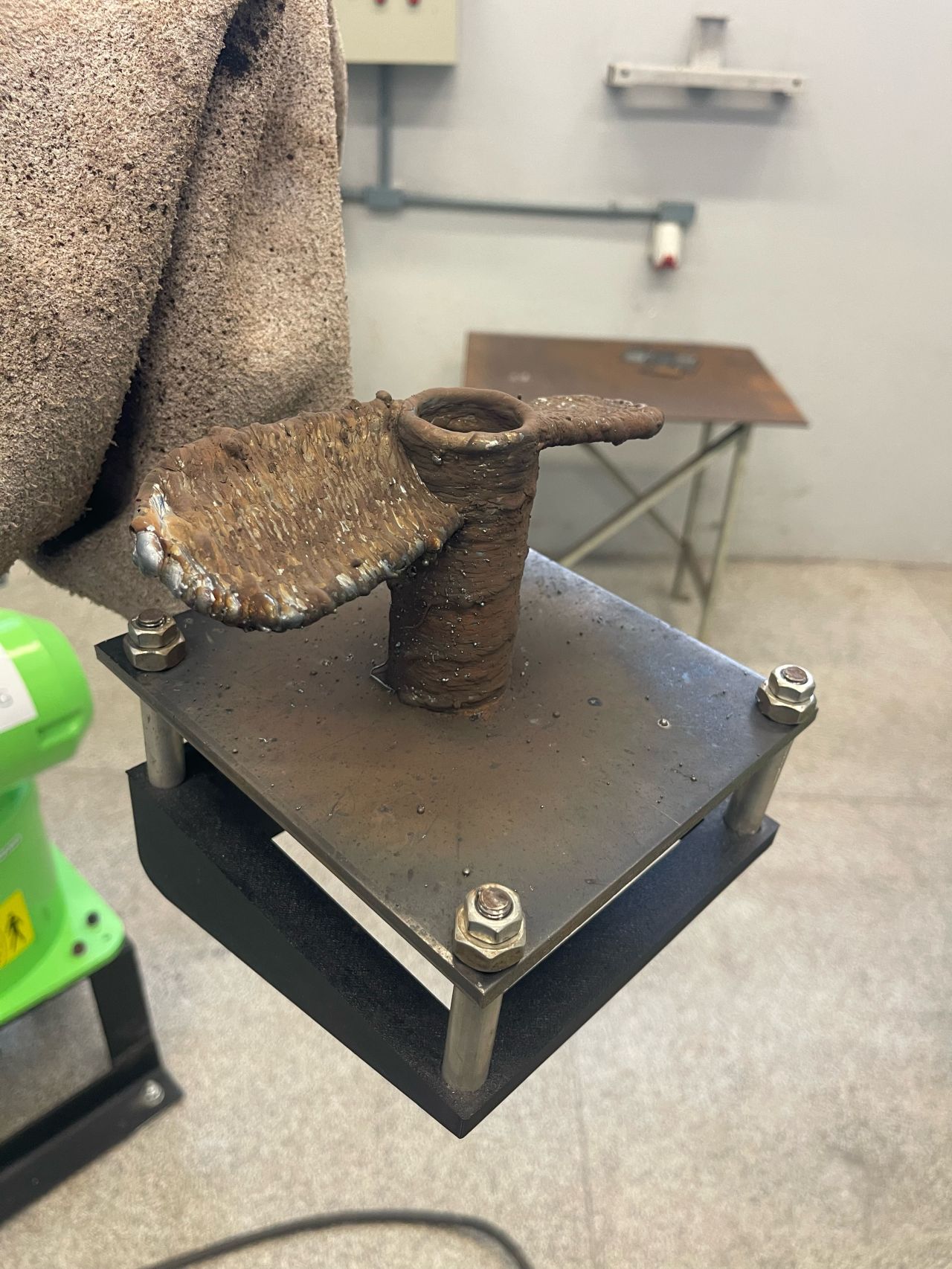
The workflow was validated experimentally with the WAAM-GMAW process, successfully manufacturing both prismatic parts and helical parts — the latter made use of substrate reorientation during deposition. Advisor: Prof. Dr. Erwin Werner Teichmann. The thesis received the highest possible grade.
Products and Solutions
Product
ENCY Robot: A complete offline robot programming solutionView product