CAD/CAM Explained: A Guide to Modern Manufacturing Solutions
Learn about CAD/CAM systems, software, and solutions in this comprehensive guide. Discover how to choose the best CAD/CAM software for your manufacturing needs and stay ahead with future trends in CAD/CAM technology.
Engineering the Future with CAD/CAM
Whether you're designing a custom prosthetic, programming a robotic arm for high-speed welding, or producing precision aerospace parts, CAD/CAM technologies lie at the heart of modern manufacturing. These digital tools have revolutionized the way engineers and manufacturers conceptualize, develop, and execute products — bringing complex ideas to life faster, with greater accuracy, and at a lower cost.
CAD/CAM — short for Computer-Aided Design and Computer-Aided Manufacturing — forms the digital backbone of numerous industries including aerospace, automotive, medical devices, electronics, consumer goods, and even architecture. These systems work in tandem to create a direct link between design and production, enabling faster product development cycles, easier customization, and reduced human error. Understanding how CAD and CAM complement each other is crucial for any organization aiming to modernize and optimize its manufacturing workflow.
CAD: Computer-Aided Design
CAD software facilitates the digital design of physical products by enabling the creation of detailed 2D drawings and complex 3D models. Unlike manual drafting, CAD allows for greater precision, parametric control, and real-time collaboration between design teams.
Designers can apply parametric modeling techniques to build reusable design templates that adapt to changing requirements. 3D models can be visualized from all angles, examined in simulations, and exported into analysis tools for stress testing. CAD platforms also automate the generation of bill of materials (BOM), technical drawings, and assembly instructions — all essential for downstream manufacturing.
Moreover, CAD systems are integrated with libraries of standard components, version control mechanisms, and cloud-based storage, enabling rapid iteration and team collaboration across multiple locations. With growing support for virtual and augmented reality, CAD is also evolving into an immersive experience for reviewing and validating complex assemblies.
CAM: Computer-Aided Manufacturing
CAM software translates 3D CAD models into instructions for CNC machines, turning digital designs into physical reality. Through toolpath generation, simulation, and post-processing, CAM automates the creation of machining instructions that control cutting tools with high precision.
At the core of CAM is the ability to plan machining strategies for different operations — milling, turning, drilling, cutting, or even hybrid additive/subtractive workflows. CAM systems calculate optimal cutting paths, adjust speeds and feeds based on material and tool specifications, and simulate the entire machining process to detect collisions and inefficiencies.
Post-processors then convert the toolpath data into G-code tailored for specific CNC machines and controllers. This minimizes operator input and ensures a high level of consistency in production. CAM software also facilitates multi-axis machining, automated stock recognition, tool library management, and integration with metrology systems for quality assurance.
From Design to Production: The Power of Integration
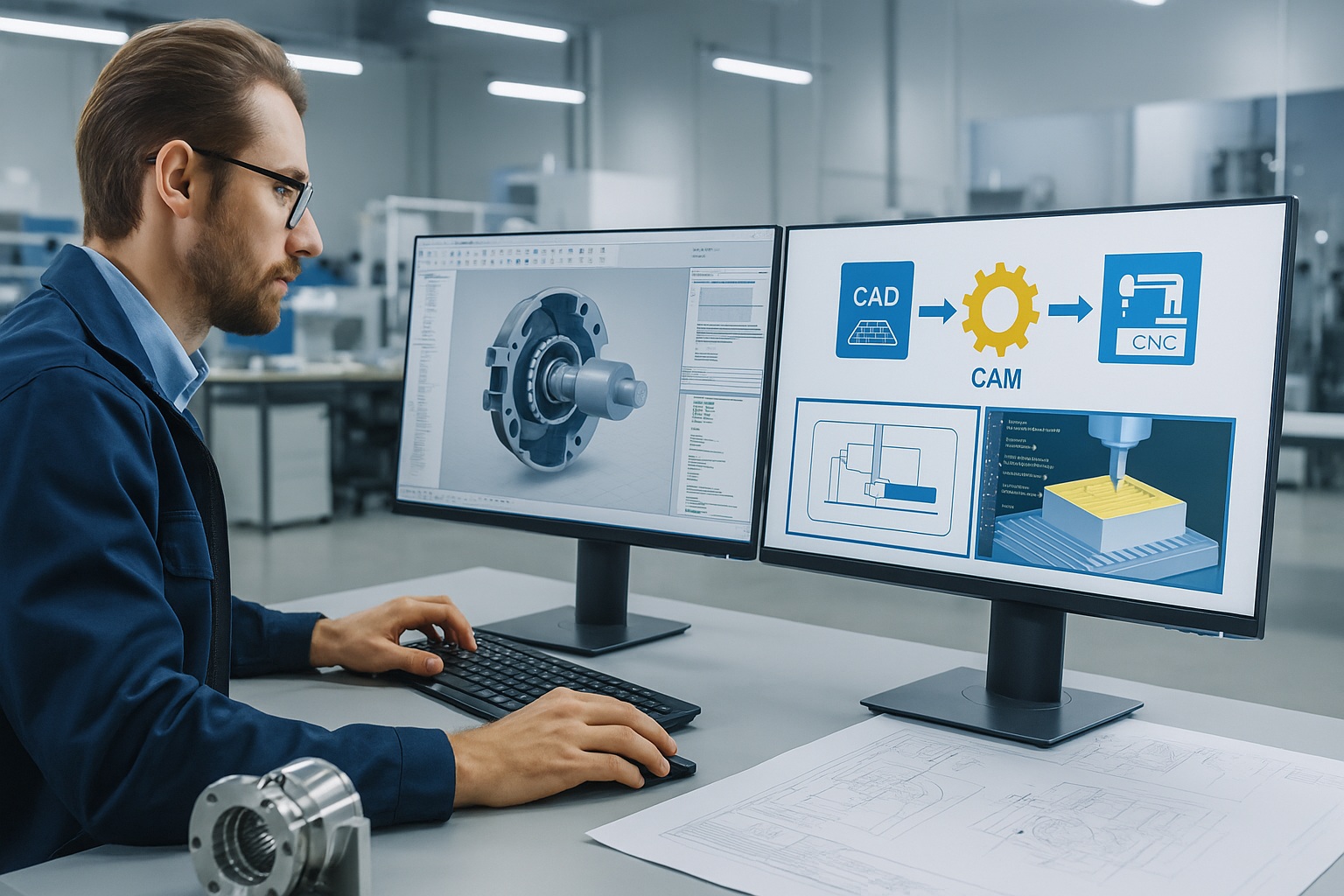
An integrated CAD/CAM environment streamlines the transition from design to manufacturing, improving efficiency and reducing the risk of errors caused by manual data transfer.
Here’s how a typical workflow unfolds:
- A designer creates a 3D model in CAD, capturing dimensions, tolerances, and design intent.
- The model is exported in a neutral format such as STEP or IGES, ensuring compatibility.
- The CAM software imports the file and automatically recognizes part features.
- Machining strategies are defined, including tool selection, cutting parameters, and operation sequences.
- Toolpaths are generated and simulated to optimize material removal and validate the process.
- The output is post-processed into G-code tailored for the target CNC machine.
- This G-code is transferred to the machine either via USB, network, or DNC system for execution.
By eliminating the disconnect between design and production, integration saves time, reduces scrap, and enables quicker feedback cycles.
Integrated CAD/CAM Solutions: A Strategic Advantage
Integrated CAD/CAM platforms offer a unified environment where design and manufacturing tools share a common database, eliminating compatibility issues and reducing lead times. Instead of switching between disconnected systems, users work in a single interface that dynamically updates design and machining data. This improves traceability, streamlines change management, and enhances cross-team collaboration.
| Benefit | Description |
|---|---|
| Unified Workflow | Seamless transition from design to toolpath generation |
| Shared Data Model | Reduces errors caused by importing/exporting files |
| Faster Iteration | Design changes are automatically reflected in manufacturing processes |
| Enhanced Productivity | Less time spent on manual translation and duplication of effort |
| Centralized Collaboration | Teams access the same project data, improving communication and alignment |
Such solutions are particularly valuable in environments with high product variation, tight delivery windows, or multiple engineering teams working in parallel.
ENCY — A Unified CAD/CAM Ecosystem
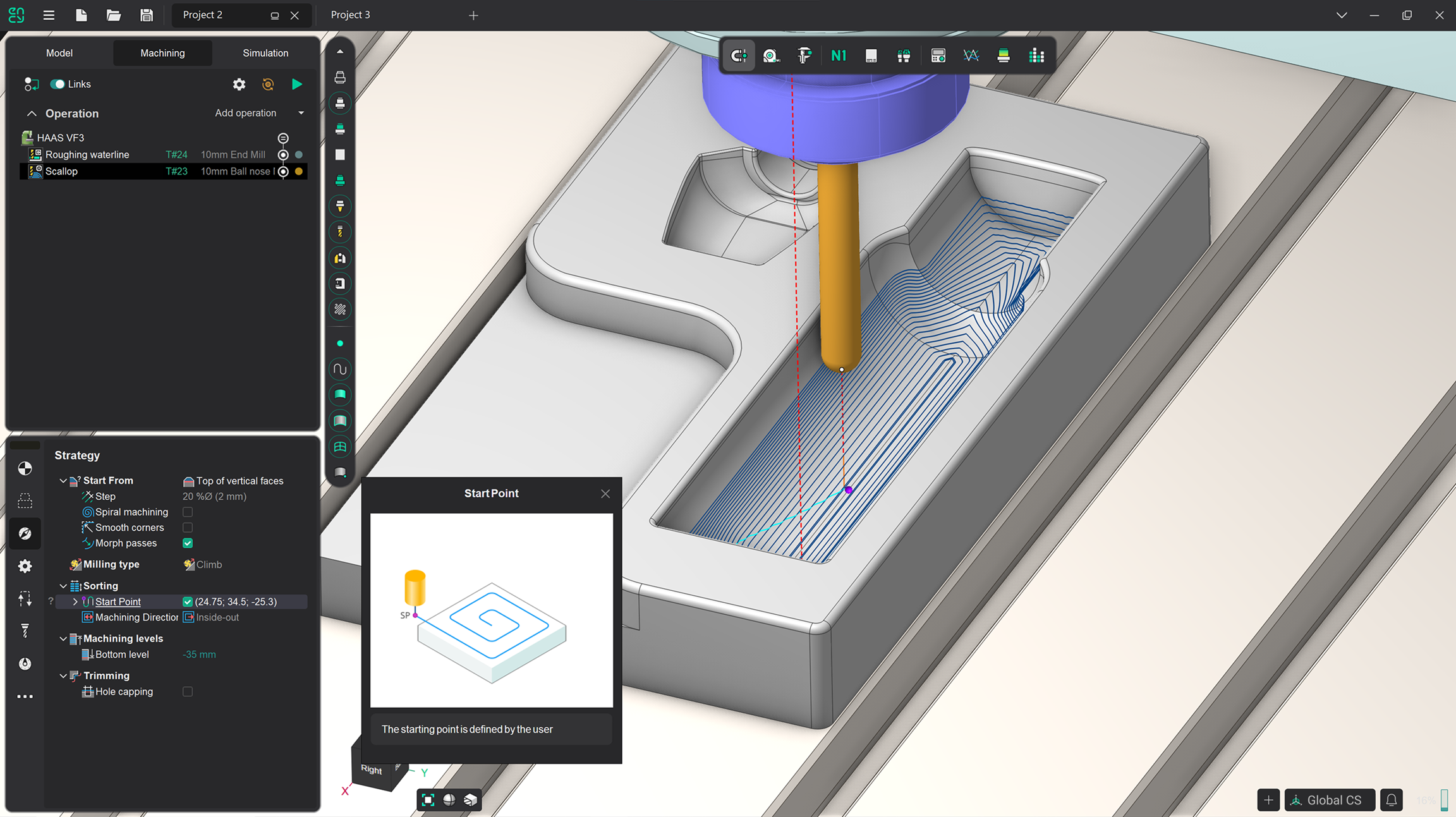
One standout solution in the CAD/CAM market is ENCY, a next-generation software platform that unifies every step of the manufacturing process. ENCY is designed for users ranging from small workshops to enterprise-scale manufacturers.
The ENCY X ecosystem includes:
- ENCY: A versatile CAD/CAM core supporting 2D and 3D design, multi-axis, and mill-turn operations.
- ENCY Robot: Offline programming for industrial robots across processes such as milling, additive manufacturing, deburring, and welding.
- ENCY Tuner: A no-code environment for configuring machine interpreters and customizing post-processors.
- ENCY Clouds: A platform for project sharing, version control, and remote collaboration between teams.
With its API-driven architecture, customizable workflows, and support for real-time cloud collaboration, ENCY is ideal for businesses aiming to digitalize their operations without locking into rigid processes. Its open ecosystem also allows for integration with ERP systems, simulation platforms, and IoT tools.
Choosing the Right CAD/CAM Software: Key Criteria
Selecting the right software depends on several technical, operational, and strategic considerations:
- Functionality: Does the system support the specific types of parts and machines you use — 2.5D, 3+2, 5-axis, lathe-mill, EDM, or robots?
- Usability: How intuitive is the user interface? Are workflows guided or customizable? What’s the learning curve for new users?
- Compatibility: Can the software easily integrate with your CAD, PLM, ERP, or MES systems?
- Performance: Does the platform support high-speed machining, rest machining, toolpath optimization, and real-time simulation?
- Flexibility: Is the licensing model scalable? Can the software grow with your business, or support remote teams via cloud?
Vendor support is equally important. Comprehensive documentation, certified training, onboarding support, and a strong user community significantly reduce risk and speed up ROI.
ENCY
CAD/CAM for a new generation
- Transform complex CAM tasks into simple workflows with an intuitive, state-of-art interface designed for 4K displays
- Access comprehensive machining strategies from 3-axis to 5-axis, including HSM, mill-turn, and additive manufacturing
- Simulate and verify NC code before running it on your machine with ultra-fast voxel and high-precision solid simulation
- Save time with machine-aware toolpaths that are automatically optimized for your equipment's specific constraints
Typical Manufacturing Applications of CAD/CAM
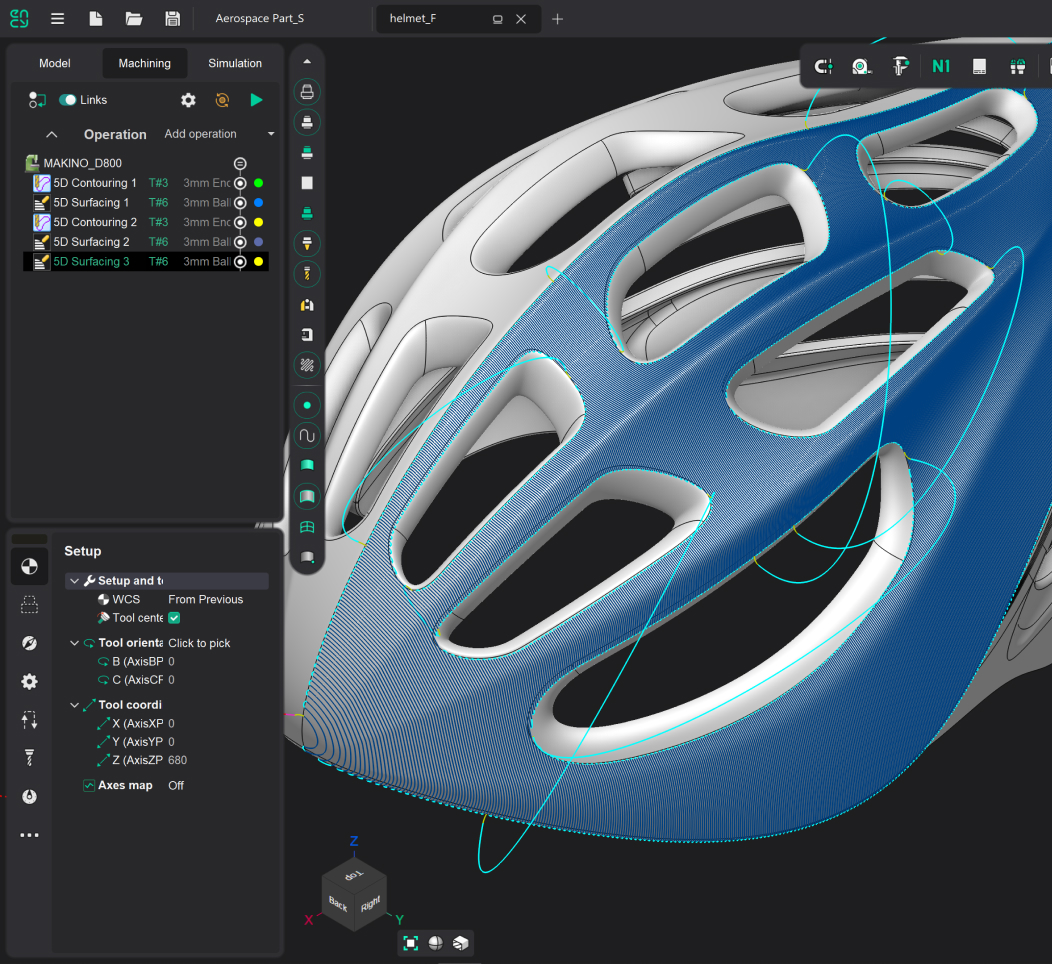
Across industries, CAD/CAM plays a central role in streamlining production and enhancing product quality. In aerospace, manufacturers rely on these systems for producing precision turbine blades, lightweight structural assemblies, and specialized tooling. Automotive companies use CAD/CAM to speed up die and mold production, optimize engine component machining, and accelerate vehicle prototyping. In medical fields, the technology supports the development of orthopedic implants and surgical instruments, where patient-specific customization and strict tolerances are critical. The electronics industry applies CAD/CAM for producing small enclosures, engraved parts, and complex heat sinks with tight geometries. For smaller workshops and job shops, CAD/CAM offers the ability to quickly respond to diverse customer requests, deliver high-mix low-volume production, and maintain consistent quality.
Economic Impact and Return on Investment
Modern CAD/CAM solutions deliver tangible ROI through increased efficiency, improved quality, and better machine utilization. Typical business outcomes include:
- 40–60% faster programming time using tool libraries, templates, and automation
- 20–30% reduction in scrap and rework, thanks to accurate simulations and collision checks
- 15–25% increase in equipment utilization, driven by optimized toolpaths and fewer setups
- 6–18 months payback period, with faster project completion and less downtime
Beyond these metrics, companies benefit from improved customer satisfaction, enhanced product traceability, and better team productivity.
Personnel Requirements and Training
To successfully implement CAD/CAM technologies, manufacturers must ensure their teams have both technical knowledge and practical skills. Designers using CAD tools must be proficient in 3D modeling, understand design standards such as GD&T, and be capable of interpreting complex assemblies. CAM programmers should be well-versed in CNC principles, cutting strategies, tooling options, and post-processing logic. Machine operators must be able to read setup sheets, understand G-code, and perform accurate setups and inspections. Additionally, IT personnel are needed to maintain software installations, manage updates, and ensure data security. Structured training — whether delivered through software vendors, vocational institutions, or internal mentorship — plays a vital role in upskilling staff and building long-term expertise.
Learn ENCY CAD/CAM with video courses
Master all features of ENCY through our comprehensive video tutorials. Start from interface basics to advanced machining strategies.
- Step-by-step software guides
- Real project examples
- Get ENCY Certified upon completion
Emerging Trends in CAD/CAM
CAD/CAM is undergoing a transformation through disruptive technologies. Trends reshaping the field include:
- AI and Machine Learning: Automating decision-making in toolpath optimization and adaptive machining.
- Cloud-Native Workflows: Enabling global collaboration, file access, and process management from anywhere.
- Additive Manufacturing Integration: Combining 3D printing with subtractive methods for hybrid production.
- Digital Twins and Simulation: Real-time process feedback and predictive maintenance for CNC systems.
- AR/VR Interfaces: Providing immersive environments for design validation, operator training, and layout planning.
These innovations not only improve efficiency but also open new possibilities for mass customization, lights-out manufacturing, and smart factories.
Embracing Innovation with Integrated CAD/CAM
In an increasingly competitive manufacturing landscape, integrated CAD/CAM platforms are vital for delivering precision, agility, and innovation. Platforms like ENCY offer the flexibility, scalability, and technological depth required to meet today’s demands — and tomorrow’s opportunities.
From accelerating product development to increasing shop floor efficiency, the right CAD/CAM system can transform the way you manufacture. Whether your goal is to reduce lead times, eliminate rework, or enter new markets with more sophisticated products, investing in CAD/CAM technology is a strategic step toward a more productive and sustainable future.
FAQ: CAD/CAM Essentials and Applications