30 Minutes to Program a One-Meter Sculpture with ENCY Robot
For an art exhibition in Tarragona, Spain, MecDATA produced a one-meter hand sculpture from a 21 cm original. Programming the robotic milling job in ENCY Robot took just half an hour.
The piece was made for Natàlia Ferré, a Spanish sculptor, ceramic artist, and founder of the Natàlia Ferré Gallery in Tarragona. The task was to enlarge the original nearly five times while preserving the proportions of the fingers, the creases in the palm, and the transitions between surfaces.
MecDATA, ENCY’s partner in Spain, handled the project. The company has spent more than 15 years helping customers implement CAD/CAM and robotic manufacturing, drawing on over 30 years of industry experience within its team. Its specialists develop machining processes and postprocessors, configure robotic cells, run cutting trials, and train production staff.
Prepare the Geometry for Machining
The original was digitized with a 3DeVOK scanner. The resulting mesh was checked and prepared in Rhino, scaled to the required height, and positioned for machining.
The hand model was placed so the robot could reach the palm, the back of the hand, and the recesses around the bent fingers. This required clearance for the spindle assembly and room for the robot arm to move around the workpiece.
Stock dimensions and clearance above the worktable were also considered during preparation. A compact arrangement reduces the material required, while a sacrificial base provides space for the spindle to approach at an angle.
Calculate Toolpaths. Verify Robot Motion.
The prepared geometry was imported into ENCY Robot and positioned within the virtual cell. MecDATA then calculated multiaxis milling toolpaths and checked the movements before transferring the program to the KUKA robot.
Roughing passes remove the bulk of the polystyrene foam and establish the hand’s overall shape. Finishing passes reproduce the rounded fingers, creases, and recessed areas. Each region requires a suitable tool orientation that the robot can maintain throughout the cut.
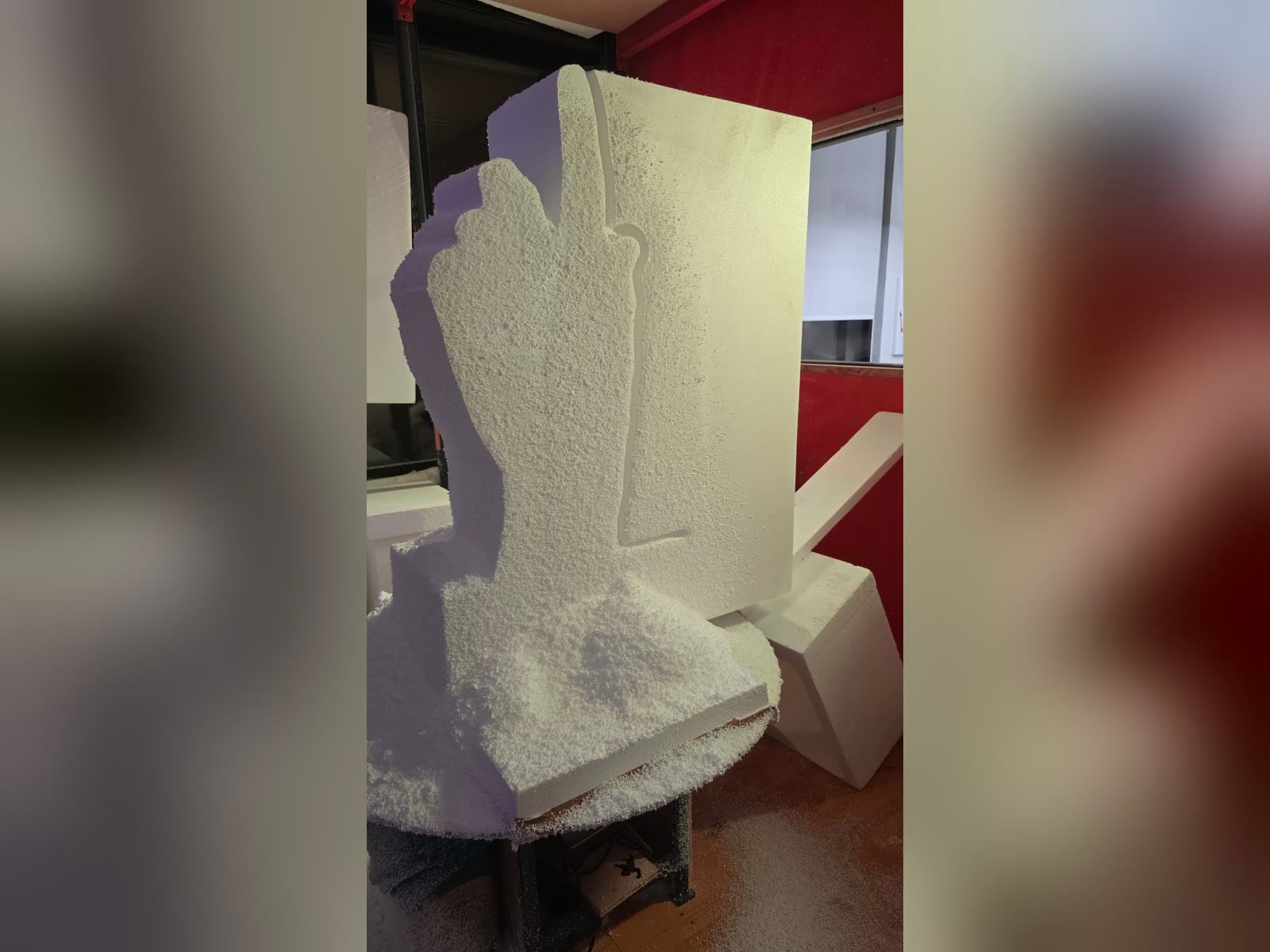
Roughing reveals the hand’s outline within the foam block.
Simulation brings the equipment into the verification process. The programmer can follow the spindle around the stock, inspect approaches to individual features, and check for potential collisions involving the tool assembly, workpiece, and cell components.
Programming in ENCY Robot took 30 minutes. After verification, the machining program was run on the KUKA, producing the one-meter sculpture in polystyrene foam.
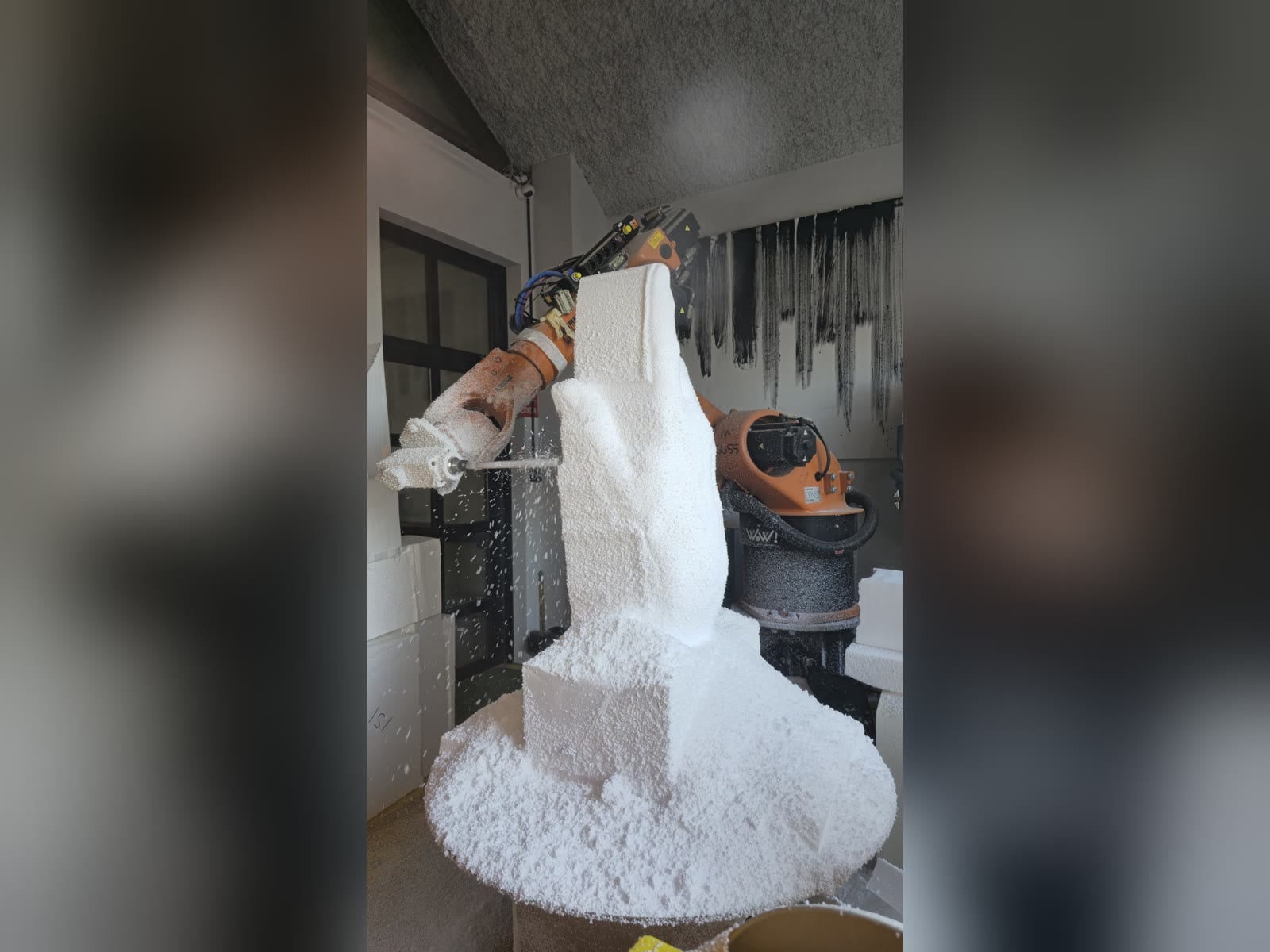
The KUKA robot mills the sculpture from polystyrene foam.
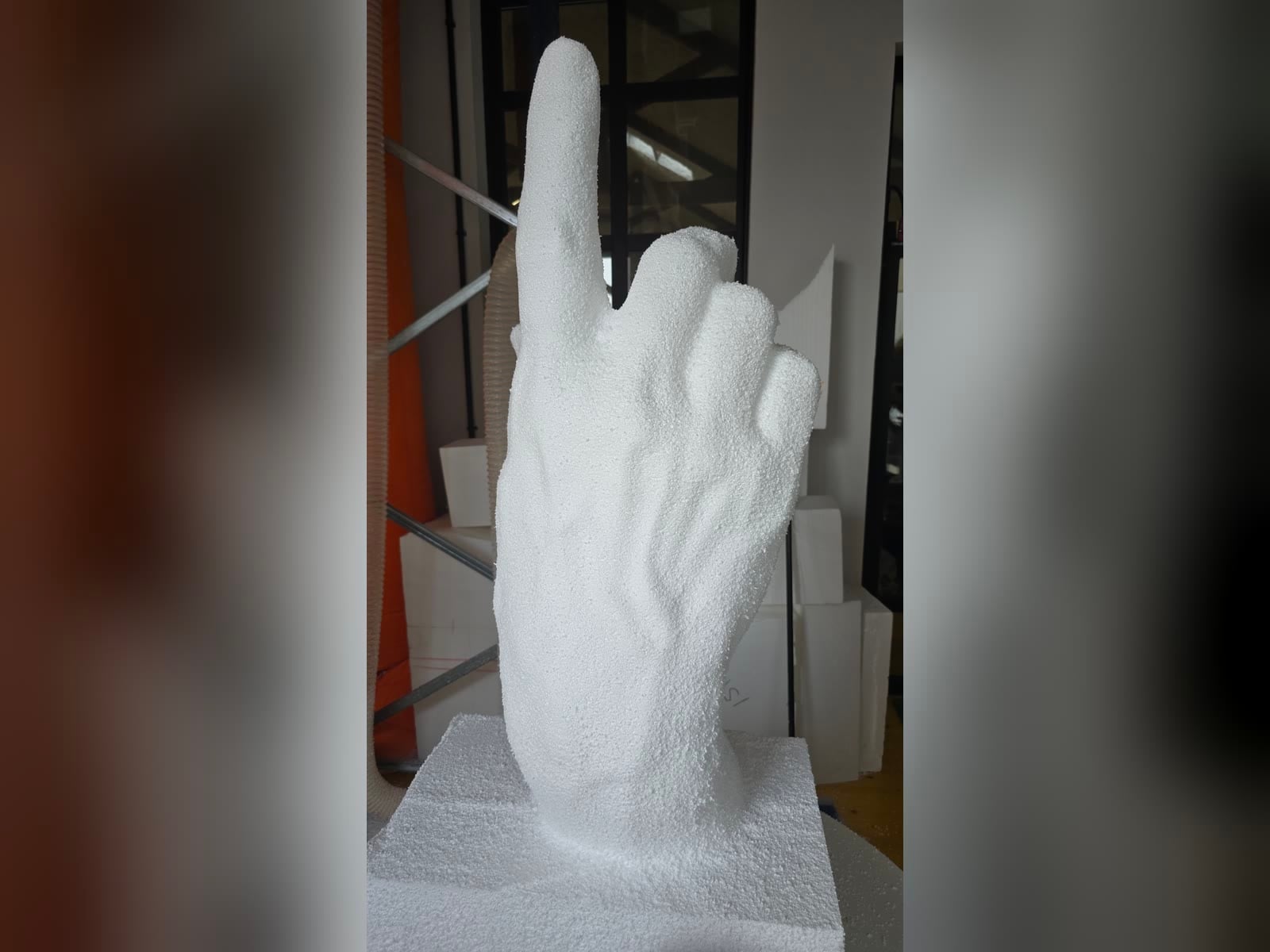
The back of the hand after finishing, showing the fingers and surface contours.
Explore the Project in ENCY Clouds
ENCY Clouds is ENCY’s cloud workspace for storing, viewing, sharing, and discussing machining projects. It connects CAM programmers, shop-floor colleagues, and technical support through project links, messaging, and file sharing.
Its browser viewer lets users inspect geometry, tools, operations, and machining parameters without opening the desktop CAM application. This makes it easier to explain a manufacturing process, discuss changes, or learn from a completed job.
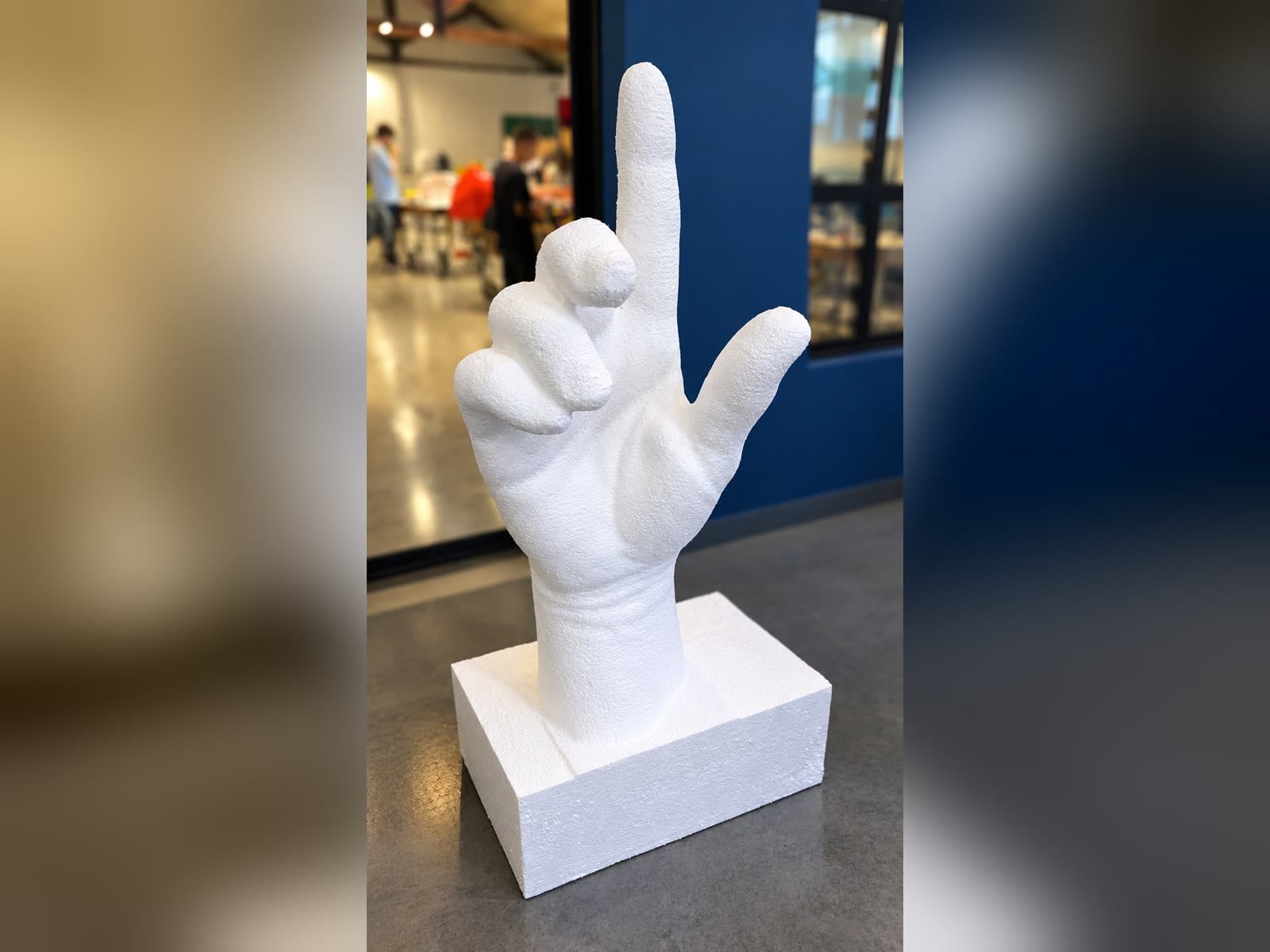
The completed one-meter hand sculpture, made for Natàlia Ferré.
MecDATA has published this job as a one-meter hand, project 7206, in ENCY Clouds. Alongside the finished sculpture, you can explore the project behind its manufacture.
Open the MecDATA project in ENCY Clouds.
Original article: MecDATA
Try ENCY Robot for free - 30 days of full access
Test the full power of offline robot programming. Build your virtual robotic cell, simulate, optimize, and generate toolpaths with no limitations.
- Full robotic cell simulation
- Advanced toolpath calculation
- Kinematics and external axes management
- Collision detection and validation
