ENCY Software Powers Robotic Fabrication of Public Sculptures in the U.S.
Robotic milling, digital fabrication, and fiberglass craftsmanship for INFINITY, a 21-foot landmark in Pompano Beach, Florida
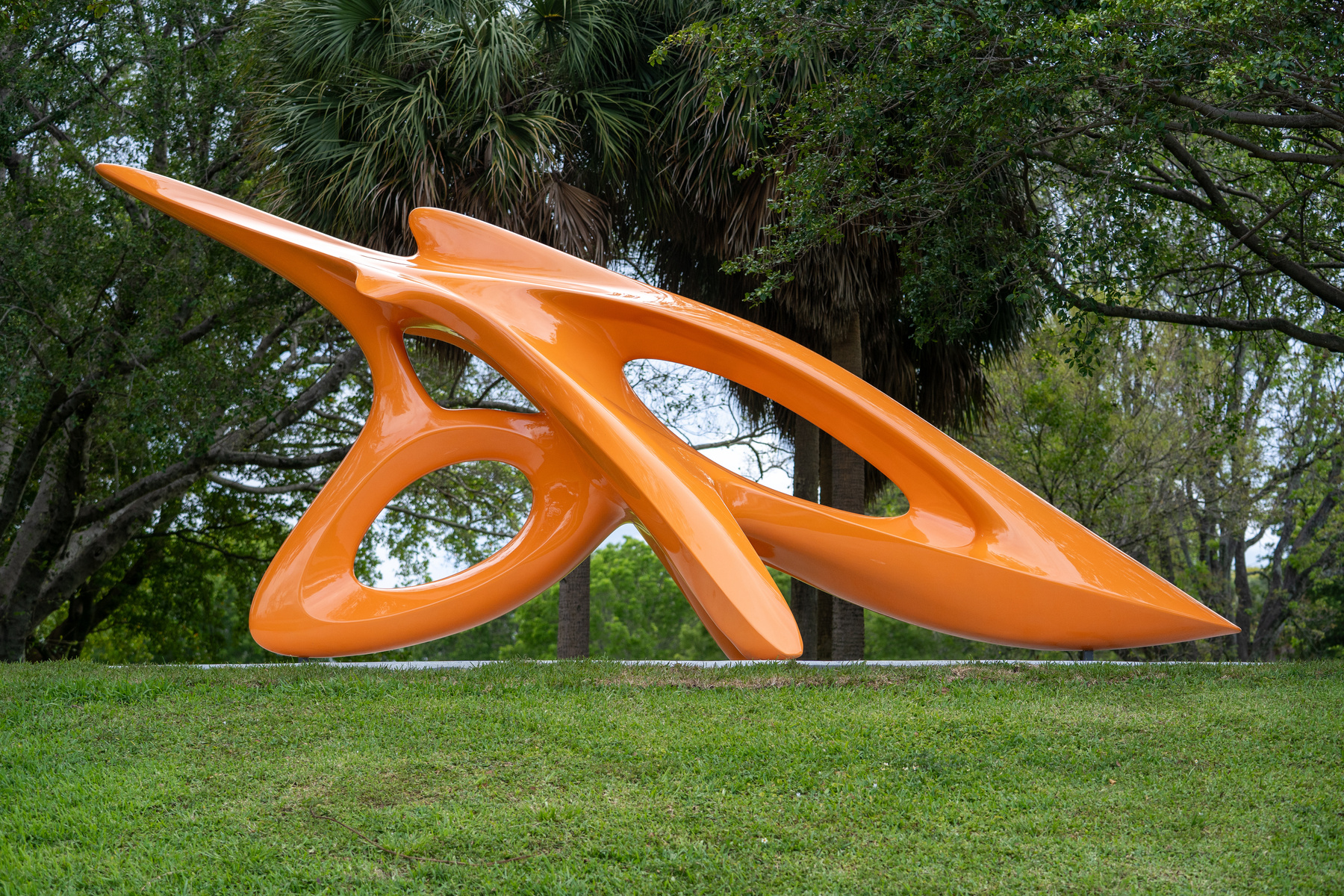
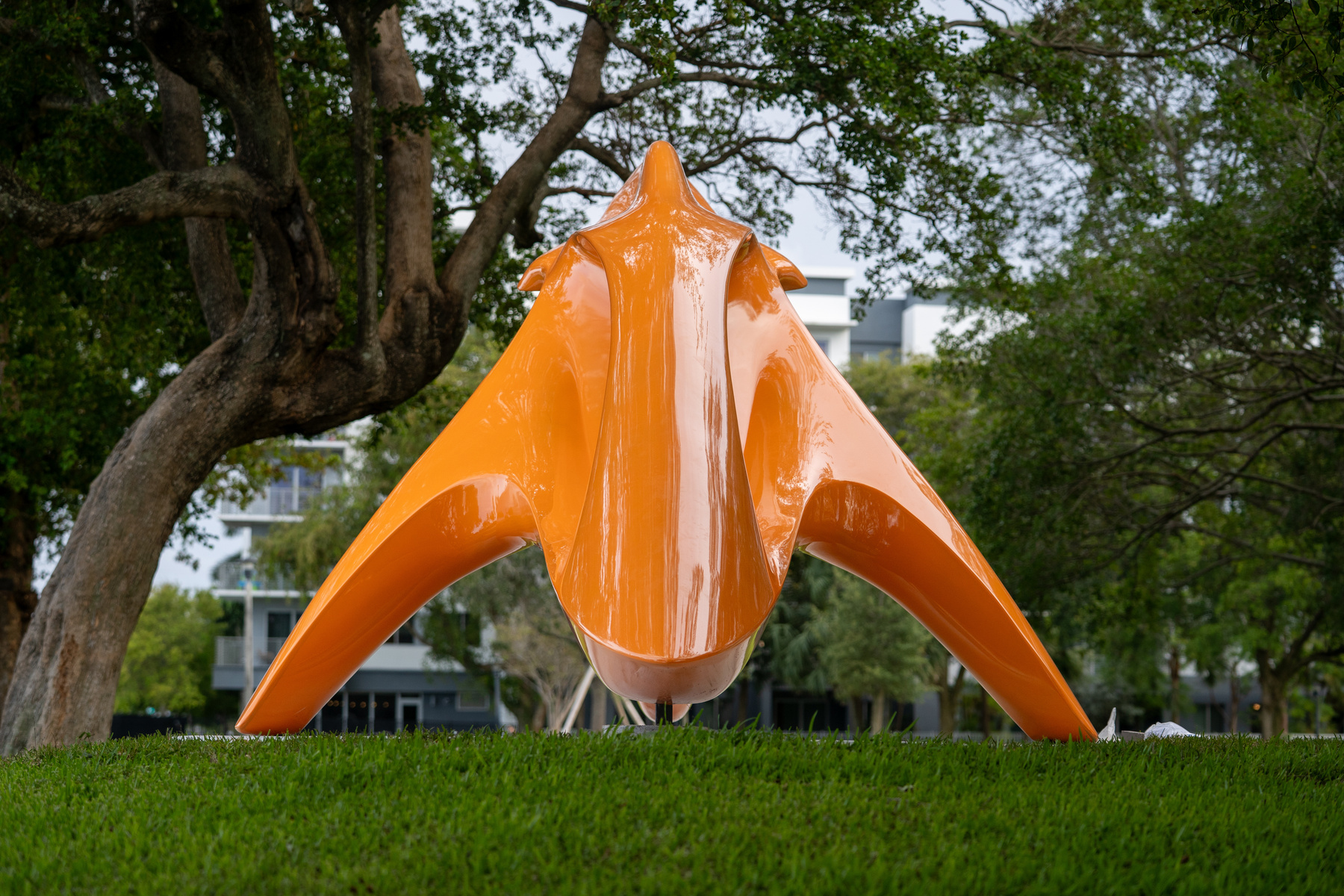
INFINITY by Volkan Alkanoglu
Fabricated by BEK Milling Solution
Robotic programming: ENCY Robot
Some public sculptures begin as sketches. Others begin as digital models. INFINITY, a 21-foot-long sculptural landmark by artist Volkan Alkanoglu, began as a complex digital form and became a large-scale physical work through robotic milling, advanced fabrication, fiberglass craftsmanship, and careful hands-on finishing.
Fabricated by BEK Milling Solution in Miami, Florida, and installed in Pompano Beach in May 2026, INFINITY is one of the public sculpture projects produced with ENCY Robot in the United States. The project shows how offline robot programming and digital manufacturing tools can help bring ambitious artistic geometry into public space.
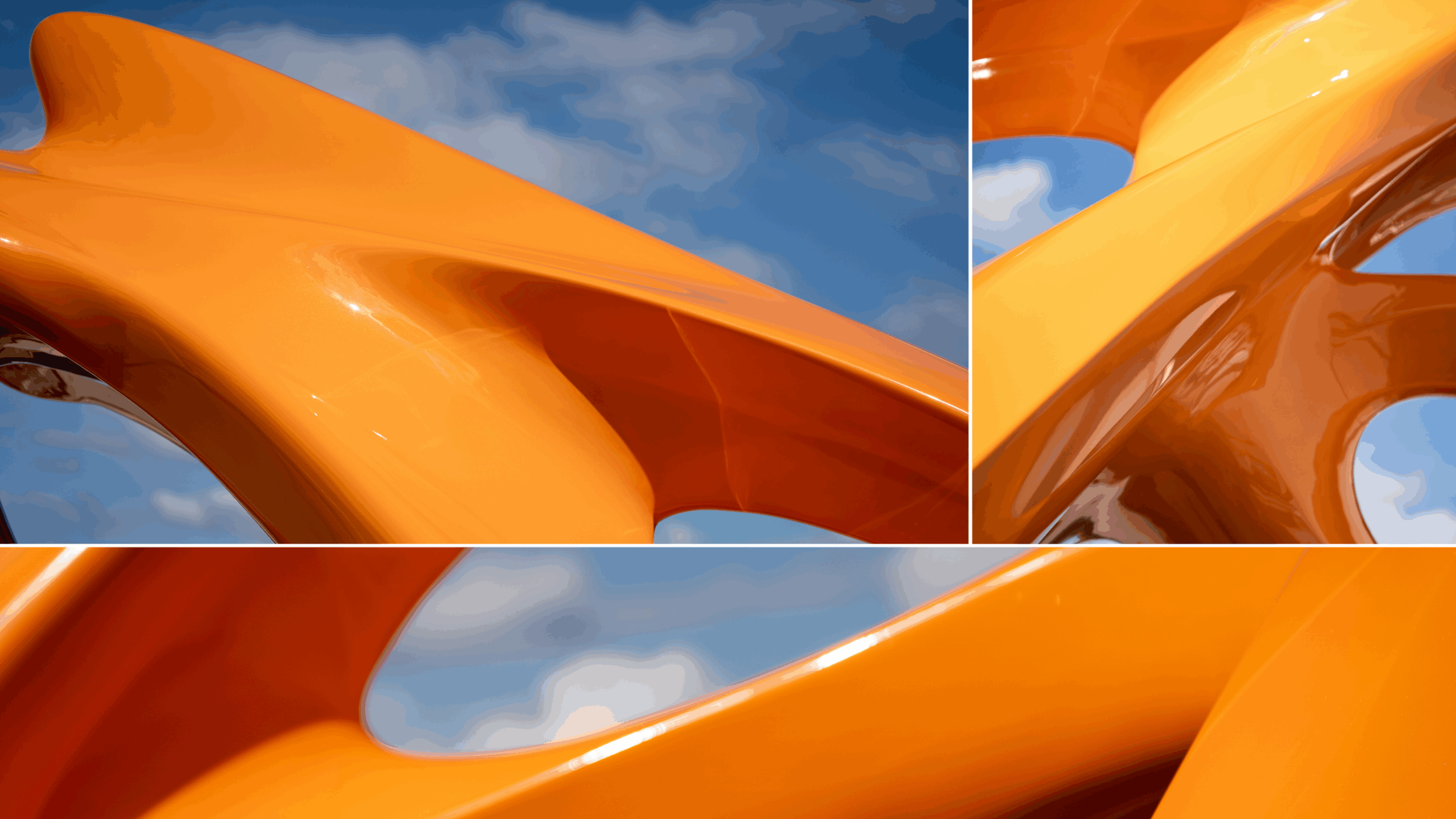
The sculpture combines fluid, aerodynamic surfaces with sharp directional transitions and a highly reflective finish. As viewers move around it, the form changes with light, shadow, and reflection.
For a work of this scale, the challenge was not simply to make it large. The challenge was to preserve the precision, flow, and visual lightness of the artist’s geometry while turning it into a durable outdoor sculpture.
That is where ENCY Robot became central to the workflow.
A digital form that required production control
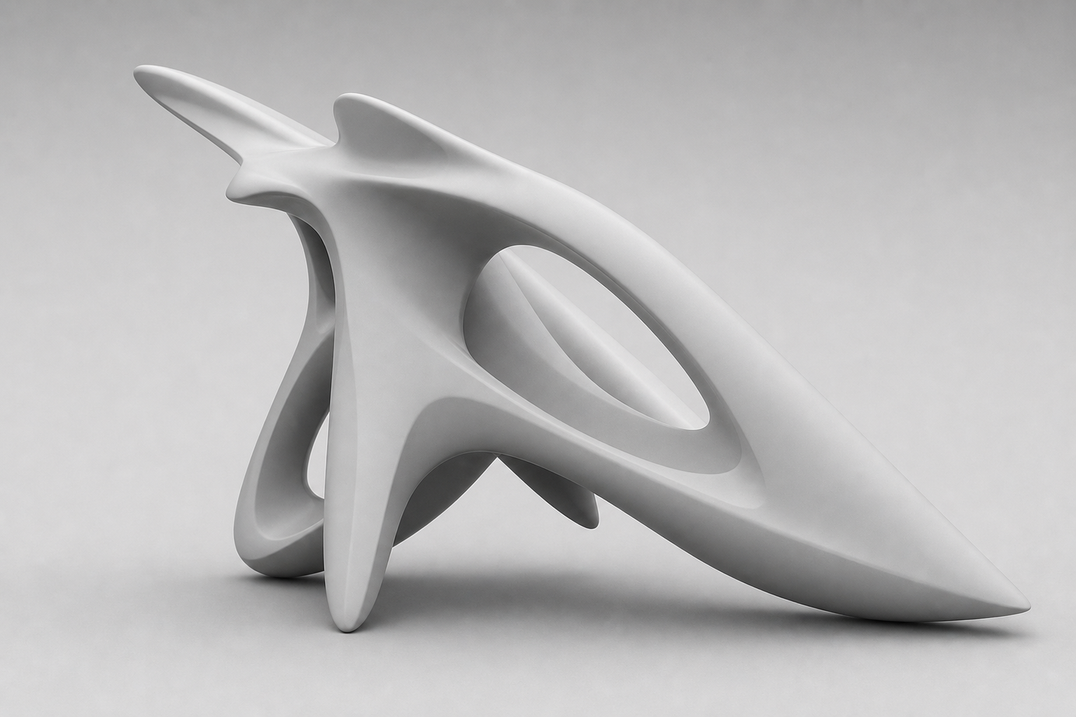
INFINITY presented a demanding fabrication challenge from the start. Its geometry included continuous flowing surfaces, deep concave transitions, large cantilevered forms, thin visual edges, and complex internal curvature.
The final surface finish made the task even more demanding. On a matte or textured sculpture, small surface imperfections can often disappear into the material. INFINITY was different. Its high-gloss finish meant that light and reflection would reveal every transition. Even a small break in surface fairness could interrupt the visual movement of the entire piece.
Traditional manual carving alone would have increased production time and added uncertainty to the final geometry. The form required a controlled digital-to-physical process that could preserve the artist’s intent while giving the fabrication team control over scale, segmentation, machining, assembly, and finishing.
BEK Milling Solution approached the project as a hybrid fabrication process. Robotic milling was used to bring the sculpture close to its final form with high geometric accuracy. Skilled craftsmanship then carried the work through assembly, reinforcement, surface refinement, painting, and preparation for public installation.
Preparing the sculpture for robotic manufacturing
The process began with the digital model. Before any material was cut, the 21-foot form had to be translated into a manufacturable strategy.
The team had to decide how the sculpture would be divided, how the robot would access complex areas, and how the individual sections would later come together as one continuous form.
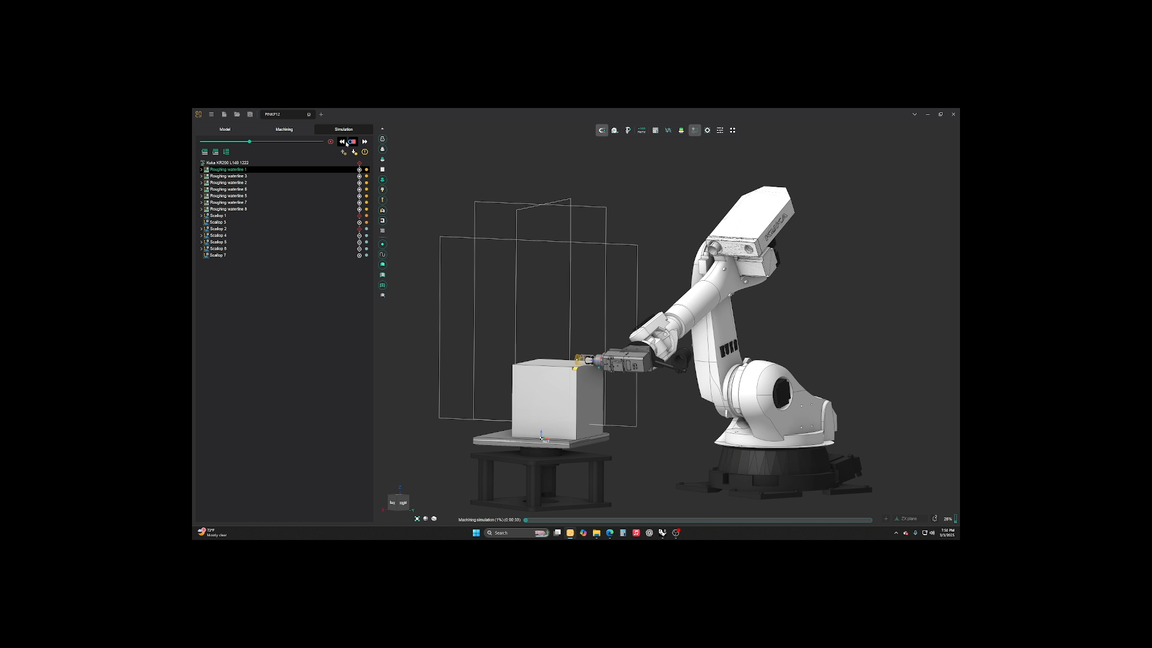
Using ENCY Robot, BEK Milling Solution generated robotic toolpaths for the sculpture. The programming phase focused on surface continuity, efficient machining, safe robot motion, foam block segmentation, material use, and reduced finishing time.
The elongated shape of INFINITY made this stage especially important. Sharp transitions and concave surfaces required more than basic toolpath generation. The robot had to move safely and predictably around the form while maintaining access to difficult areas.
ENCY Robot allowed the team to simulate and refine the robotic milling process before production began. This helped BEK Milling Solution better understand how the robot, tool, material, and digital geometry would interact on the shop floor.
Reducing uncertainty before production
In large-format sculptural work, one of the biggest risks is finding a problem only after the material is already on the machine.
A tool may not reach a concave area. A section may need a different orientation. A transition may require a different machining approach. A collision risk may appear only when the full robotic movement is considered.
With ENCY Robot, these issues could be addressed digitally before physical production started.
The software helped BEK Milling Solution plan the robotic milling process around the real constraints of the sculpture: its scale, its directional changes, its deep surfaces, and its segmented foam construction. Instead of relying on trial and error, the team could validate the process in advance and move into production with greater confidence.
As BEK Milling Solution explains:
“ENCY gave us the control we needed to move confidently from Volkan Alkanoglu’s complex digital geometry to a 21-foot public sculpture. Being able to program, simulate, and refine the robotic milling process before production helped us preserve the flow of the original design while reducing uncertainty on the shop floor.”
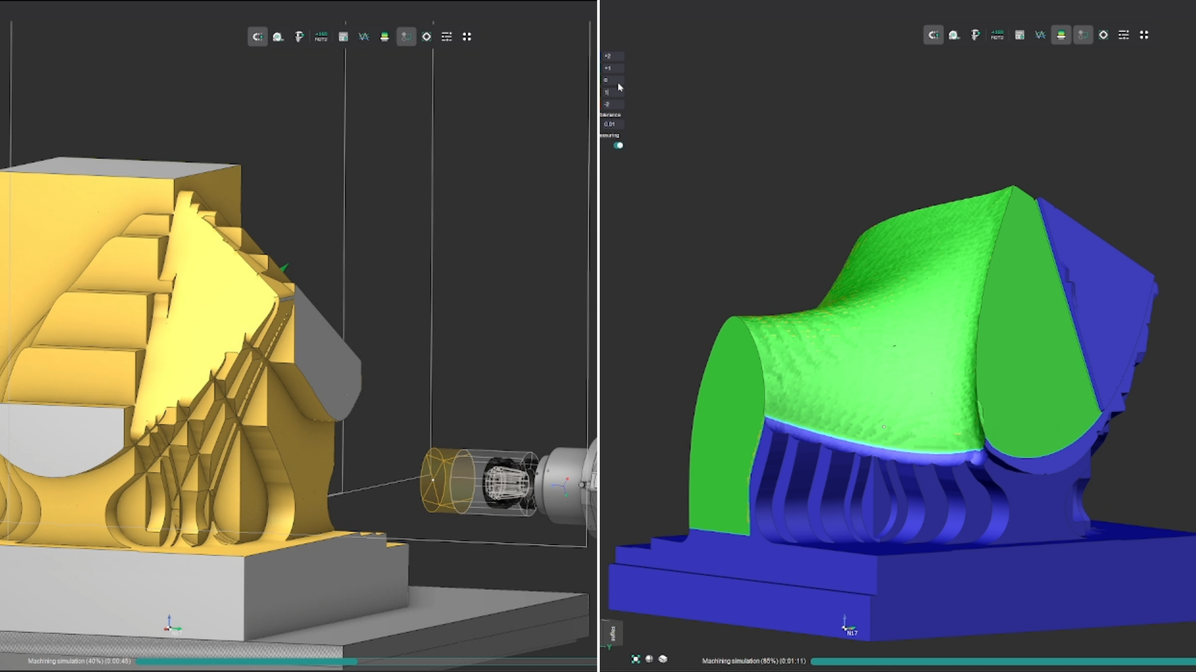
EPS robotic milling: building scale efficiently
The sculpture was milled from large-format EPS foam blocks using robotic milling technology. EPS was selected because it is lightweight, fast to machine, scalable, and well suited as a substrate for fiberglass lamination.
For a sculpture like INFINITY, foam machining offers a major advantage. It allows large volumes to be shaped quickly without the weight and handling challenges of heavier materials. The robot can remove material efficiently while preserving the complex surfaces developed from the digital model.
Through robotic milling, raw EPS blocks were transformed into precise sculptural sections. Each section carried part of the final geometry, including the flowing surfaces and sharper transitions that define the work.
After milling, the sections were assembled into the full-scale form and refined by hand to ensure continuity across the connection points.
This stage shows the value of a hybrid workflow. Robotic milling delivered accuracy, repeatability, and speed. Human craftsmanship preserved the sculptural sensitivity: the flow of the surface, the quality of transitions, and the visual continuity between sections.
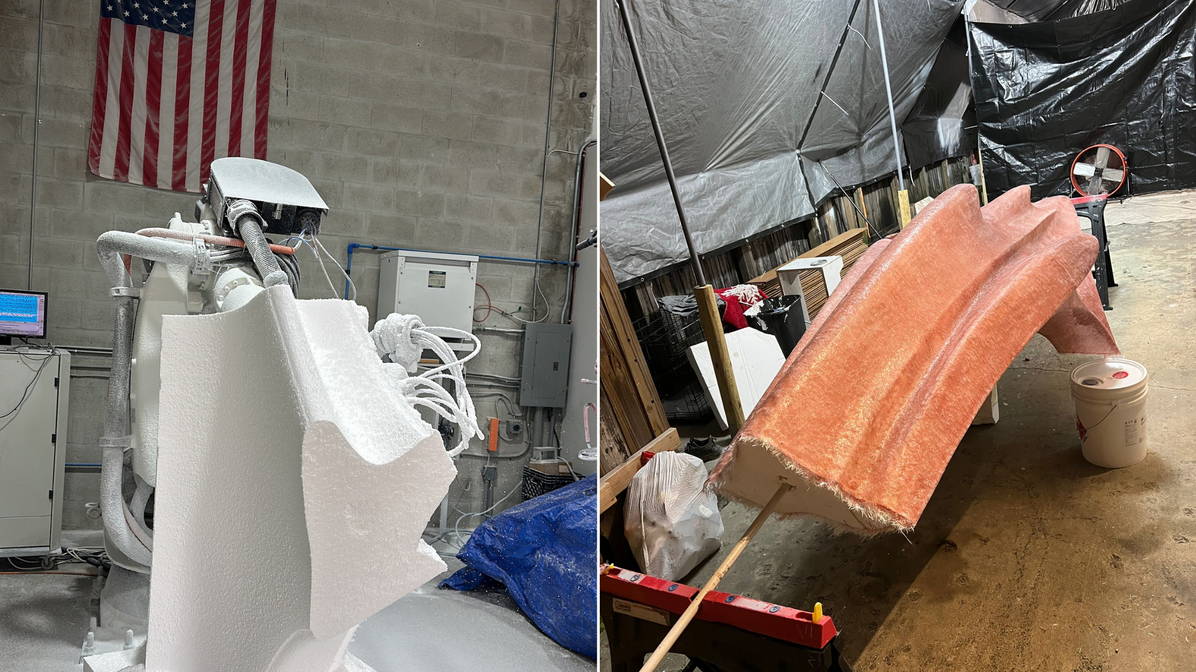
From foam core to fiberglass sculpture
After the EPS core was completed, INFINITY moved into fiberglass fabrication.
This phase transformed the milled foam form into a durable sculptural structure suitable for outdoor installation. BEK Milling Solution used composite fiberglass lamination and structural reinforcement to build a shell capable of maintaining the sculpture’s geometry through transportation, handling, installation, and long-term exposure.
The fiberglass stage required both structural thinking and aesthetic control. The shell needed to preserve the crispness of the geometry without flattening the fluidity of the form.
Internal reinforcement was integrated to support rigidity, transportation stability, installation anchoring, and resistance to environmental conditions.
The goal was not only to fabricate a large object. The goal was to create a public sculpture that could hold its shape, withstand real-world conditions, and still appear visually light and continuous.
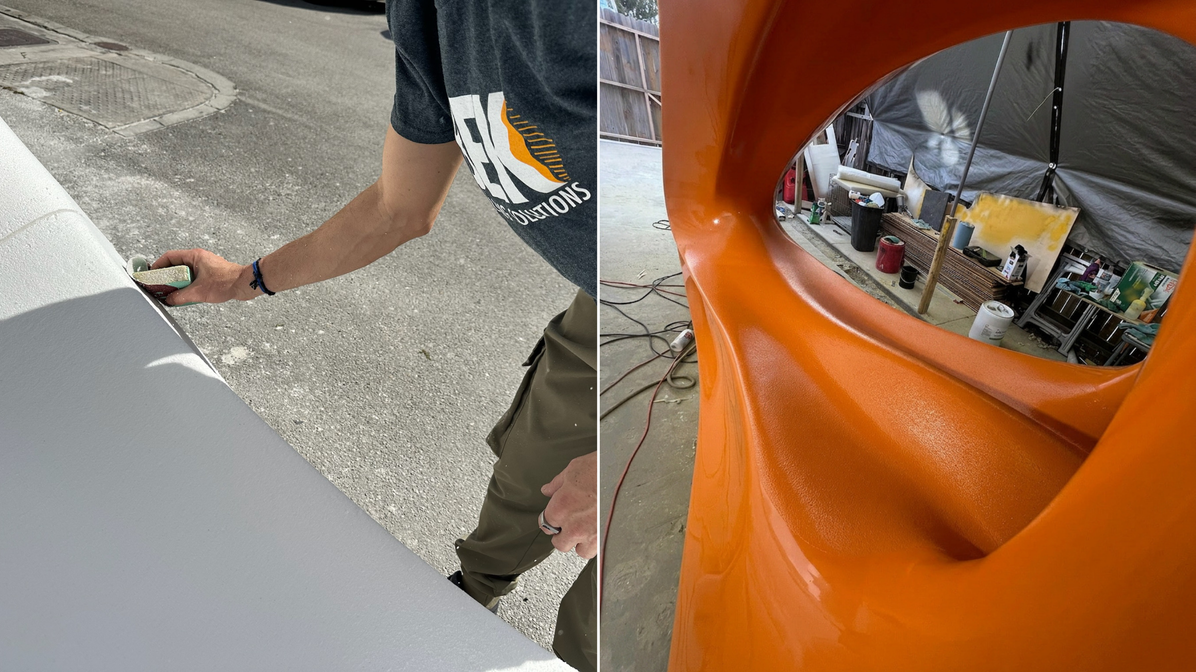
Surface quality as a fabrication challenge
The finishing process was one of the most critical parts of the project.
INFINITY’s final surface demanded a high level of refinement. The workflow included surface fairing, high-build primer, multiple sanding stages, surface correction, gloss refinement, and automotive-grade paint application.
On a reflective sculpture, surface preparation is not a secondary step. It is part of the visual structure of the work. Light moves across the surface and reveals the quality of every curve, edge, and transition.
BEK Milling Solution paid close attention to edge consistency, surface fairness, and reflection continuity. These details were essential to making the final piece work visually both up close and from an architectural distance.
From far away, INFINITY reads as a bold public landmark. Up close, the finish reveals the amount of refinement behind the object.
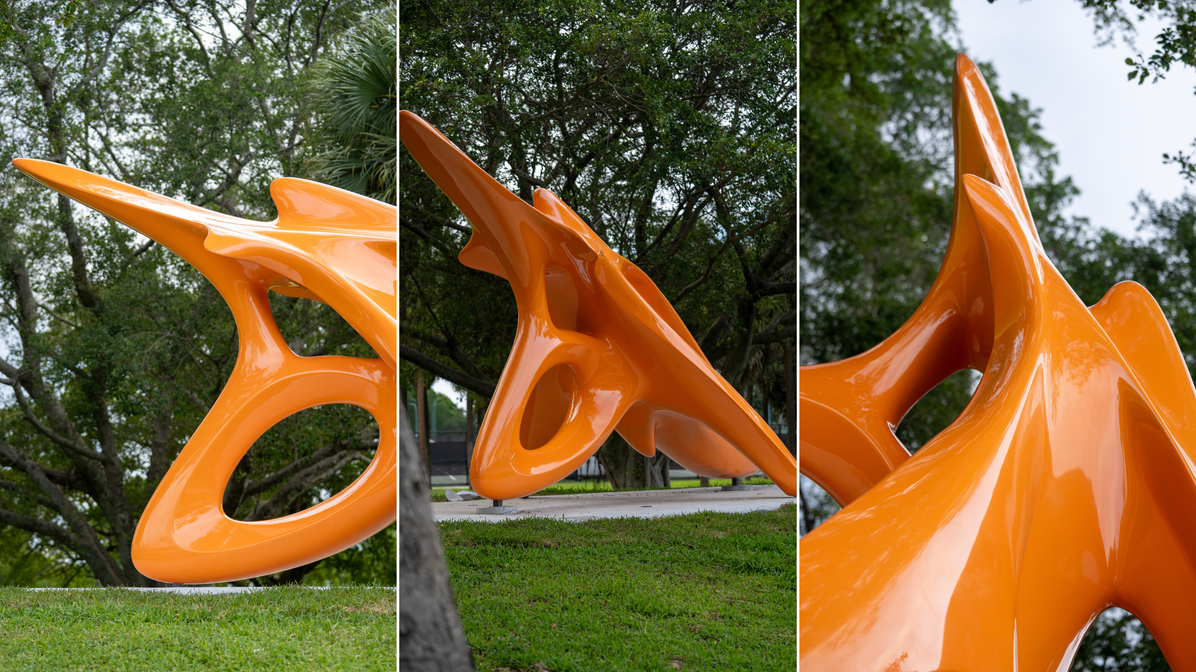
Installation in Pompano Beach
INFINITY was installed in Pompano Beach, Florida, in May 2026.
Because of its 21-foot length and complex geometry, installation planning had to be considered early in the fabrication process. The sculpture needed to be transported, handled, positioned, and anchored without compromising its surface quality or structural performance.
This meant that fabrication and installation were part of the same production logic. Support locations, lifting strategy, reinforcement, and handling requirements had to be considered from the beginning.
Once installed, INFINITY became a public-facing landmark shaped by movement and light. Its reflective surface responds to the surrounding environment, while its elongated form invites viewers to experience it from multiple angles.
Throughout the day, changing light conditions transform the sculpture’s appearance, turning digital geometry into a physical and spatial experience.
Technology and craftsmanship in one workflow
INFINITY reflects BEK Milling Solution’s approach to large-scale fabrication: advanced technology and traditional craftsmanship are not opposites. They support each other.
Robotic milling did not replace the human hand. It gave the team a more accurate physical foundation. ENCY Robot helped control the digital-to-robotic process, while BEK Milling Solution’s team brought the sculpture through assembly, fiberglass fabrication, structural reinforcement, surfacing, painting, and final refinement.
The result is a workflow where software, robot, material, and craft operate as one production system.
ENCY Robot contributed to process control and predictability. Robotic milling contributed geometric accuracy and scalability. Fiberglass craftsmanship contributed strength, durability, and surface quality. Teamwork connected every stage from digital preparation to public installation.
For artists and fabricators working with complex digital forms, this type of workflow expands what can be built. It allows ambitious geometry to move beyond the screen and become a physical structure at public scale.
What INFINITY shows about the future of sculptural fabrication
INFINITY is more than a single sculpture. It represents a broader shift in how public art, digital design, and fabrication can come together.
Artists are increasingly working with complex forms that are difficult to translate through manual methods alone. Fabricators are being asked to preserve more detail, manage larger scales, and deliver more predictable results. Public installations must meet aesthetic, structural, logistical, and environmental demands at the same time.
In this context, robotic fabrication becomes a bridge between digital design and physical production.
For BEK Milling Solution, ENCY Robot provided the programming and simulation environment needed to manage that bridge. For INFINITY, this meant moving from Volkan Alkanoglu’s complex digital geometry to a 21-foot public sculpture with greater control, fewer unknowns, and a clearer path from digital model to finished landmark.
The final work now stands in Pompano Beach as a visible result of that process: a high-gloss public sculpture shaped through robotic milling, composite fabrication, and skilled teamwork.
Project summary
Artist / Designer: Volkan Alkanoglu
Fabricator: BEK Milling Solution
Company: ENCY Software
Robotic programming software: ENCY Robot
Fabrication methods: Robotic milling, EPS machining, fiberglass fabrication, composite reinforcement, surface fairing, automotive-grade finishing
Length: Approximately 21 feet
Installation location: Pompano Beach, Florida
Installation date: May 2026