The Land of Robots Meets ENCY 3.0: ENCY World in Seoul
In the country with the world’s highest industrial robot density, ENCY World brought CNC programming, robotic machining, and live robot control to the stage.
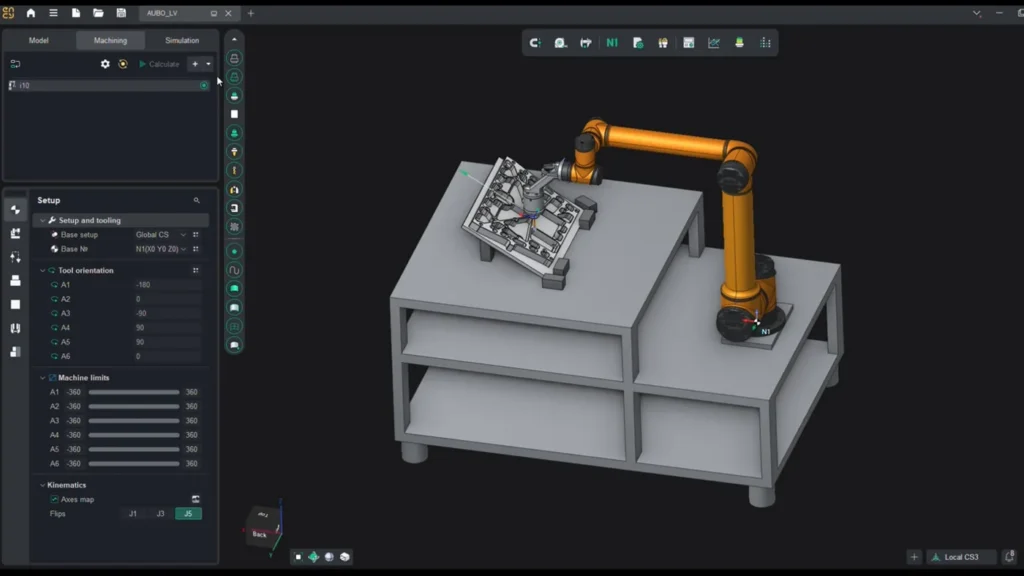
A collaborative robot runs beside the stage, its movements synchronized with the digital model in ENCY Hyper. Before starting the cycle, the YC team configured the cell in MachineMaker, generated and verified toolpaths in ENCY Robot, and made adjustments on site. Now the tool is cutting the workpiece.
That demonstration was part of ENCY World 2026: Korean Edition, held October 29 at YC College in Seoul.
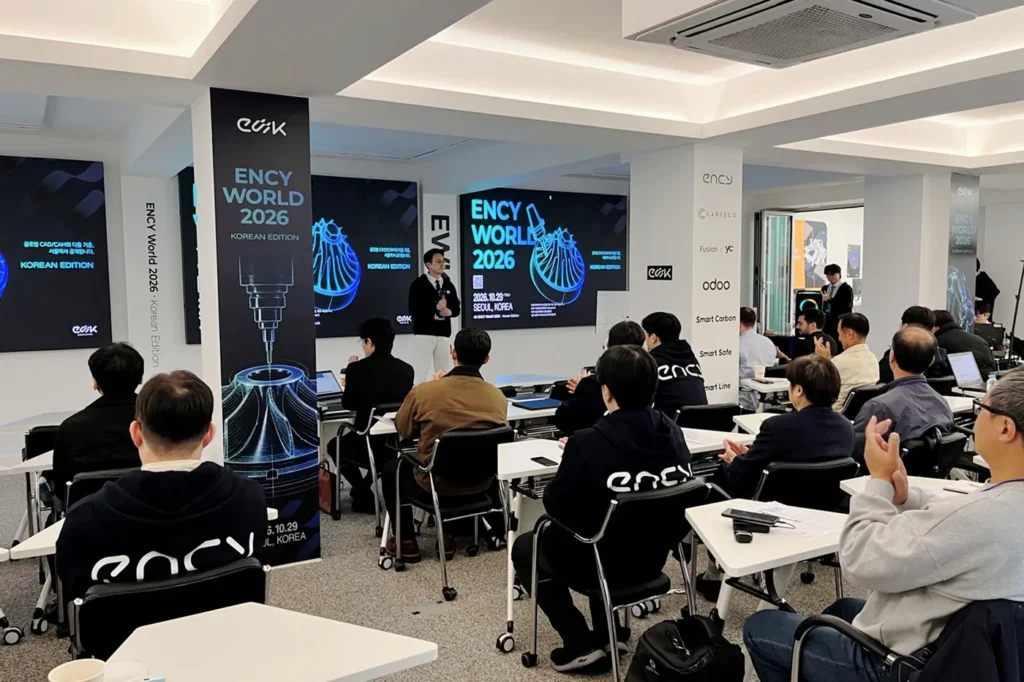
South Korea has 1,220 industrial robots per 10,000 manufacturing employees, according to 2024 data, and ranks among the world’s five largest manufacturing economies. Its factories need software for CNC programming, robotic machining, and machine tending. ENCY connects these workflows.
YC Corporation Brings Shop Floor Experience
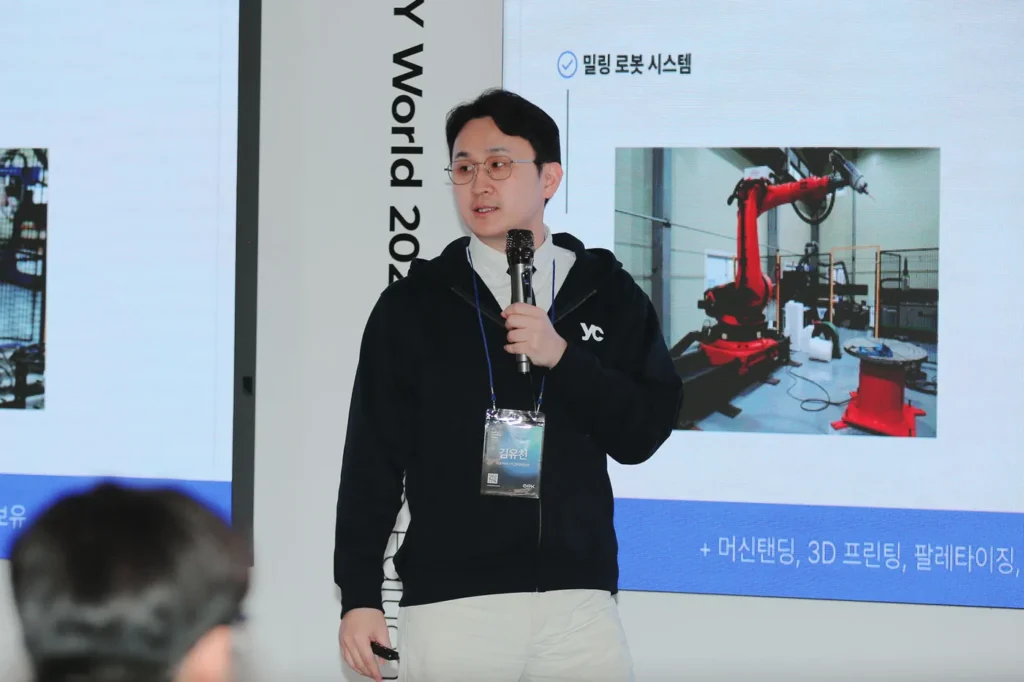
Kim Yoochun, head of YC Corporation, opened the conference and introduced the company behind ENCY Korea. Its work spans CAD/CAM implementation, robotic systems, software development, training, and technical support.
YC also operates its own manufacturing facility in Hwaseong. Milling robots, cobots, and CNC routers give the team a place to machine parts and test solutions before deploying them at customer sites. Programming, workholding, and equipment setup are part of its daily work.
ENCY 3.0 Takes the Stage
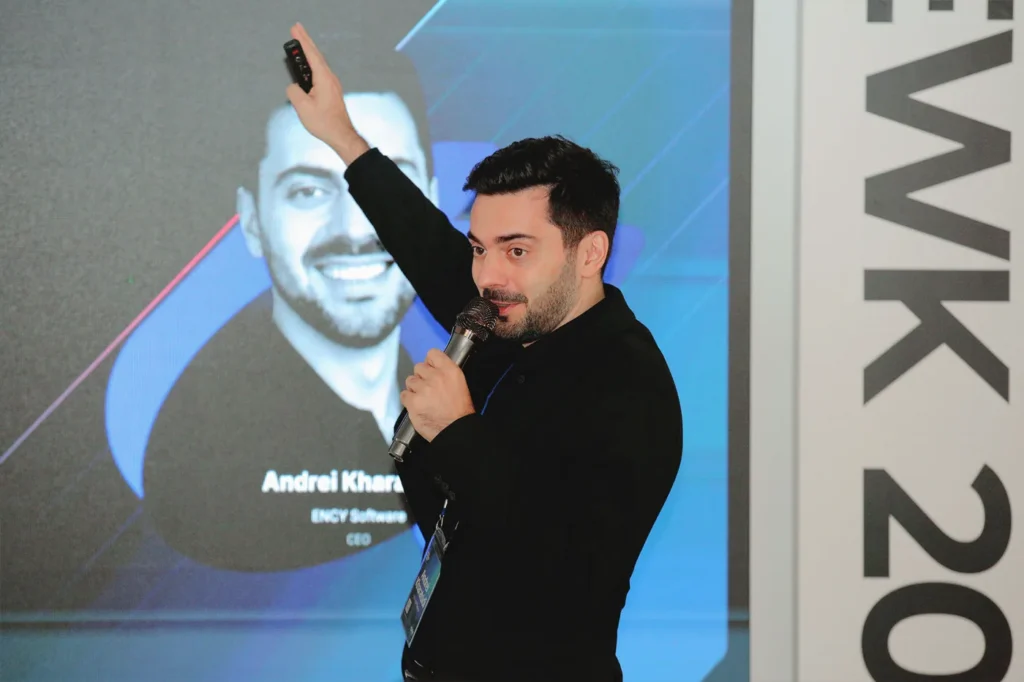
ENCY Software CEO Andrei Kharatsidi joined the event for the official Korean launch of ENCY 3.0. His presentation covered tool assembly management, toolpath calculation, machine visualization, and cloud resources for manufacturing programming.
AI featured through specific applications. The AI Super Agent beta was presented with examples of machining cost estimation and identifying problem areas in NC code.
Another demonstration started with a PDF drawing. A recorded sequence showed a 3D model being created through conversational AI commands. The team then imported it into ENCY, defined the machine, stock, fixtures, and work coordinate system, and programmed face milling, roughing, finishing, and holemaking operations.
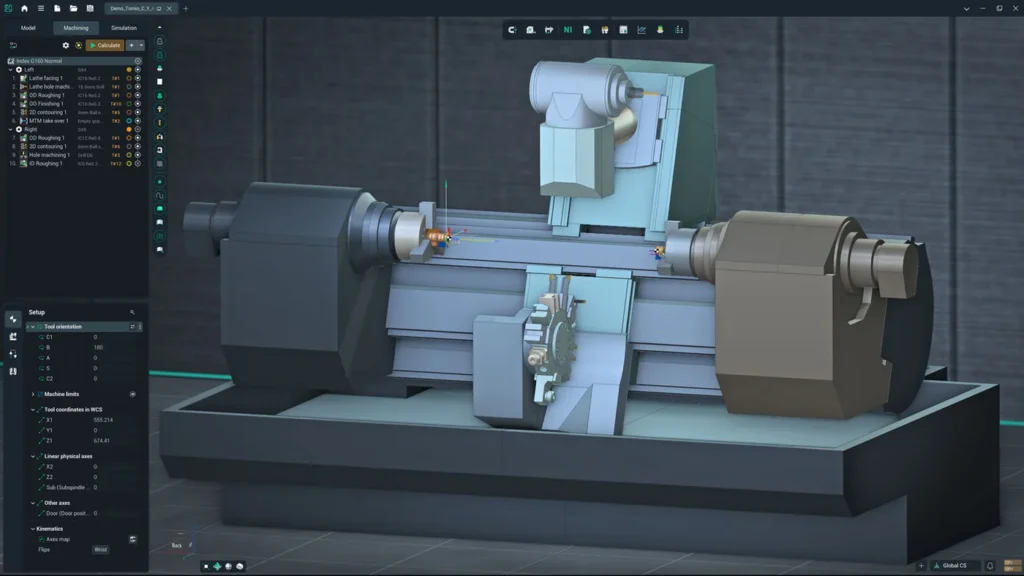
The multiaxis session covered mill-turn machines, Swiss-type lathes, 3+2 machining, and simultaneous five-axis milling. Selecting a face established the tool orientation, C-axis position, and coordinate system. Channel synchronization helped coordinate operations, while a side-by-side comparison showed simulation alongside actual cutting.
From Robotic Laser Cutting to Live Control
The robotics discussion included a Korean production example. An automotive Tier 1 supplier in Ansan used ENCY Robot to combine punching and cutting into a single robotic laser cutting process.
ENCY Hyper developer Ilnar Galiullin then explored the control side: operating physical robots and connecting vision systems, sensors, and external devices.
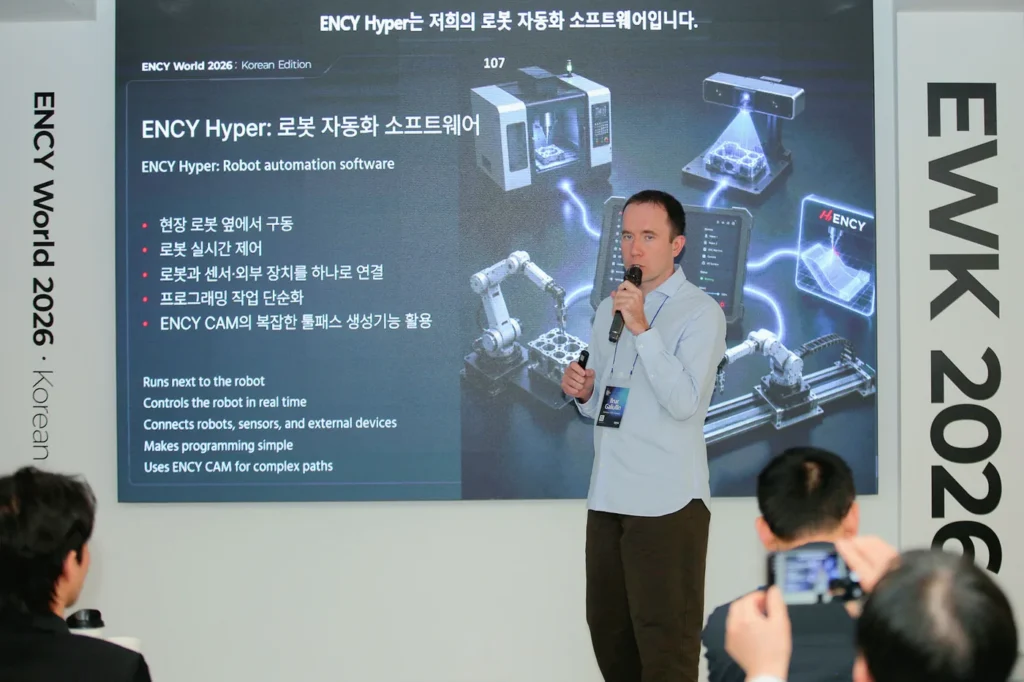
The live cobot demonstration brought that workflow together. MachineMaker defined the cell, ENCY Robot handled toolpath generation and verification, and ENCY Hyper supported on-site adjustments and execution. Attendees could follow the sequence from offline programming to motion on the actual equipment.
Two Manufacturers, Two Different Starting Points
Sun Tech had already invested in four-axis equipment, but its existing CAM software limited what it could do with the machine. The rotary joint and prototype manufacturer compared several systems before choosing ENCY Rotary. It gained greater flexibility in programming complex four-axis toolpaths and checking them in simulation.
Hogreen Air faced a different challenge. The developer of hydrogen drone power packs and fuel cells wanted to bring outsourced machining in-house. Its new five-axis machine required programming skills and machining experience that the company needed to build. ENCY Korea supported that transition with software, training, and technical assistance.
One company needed to get more from equipment it already owned. The other was establishing its own machining capability. Their stories gave attendees two concrete examples of how ENCY supports production.
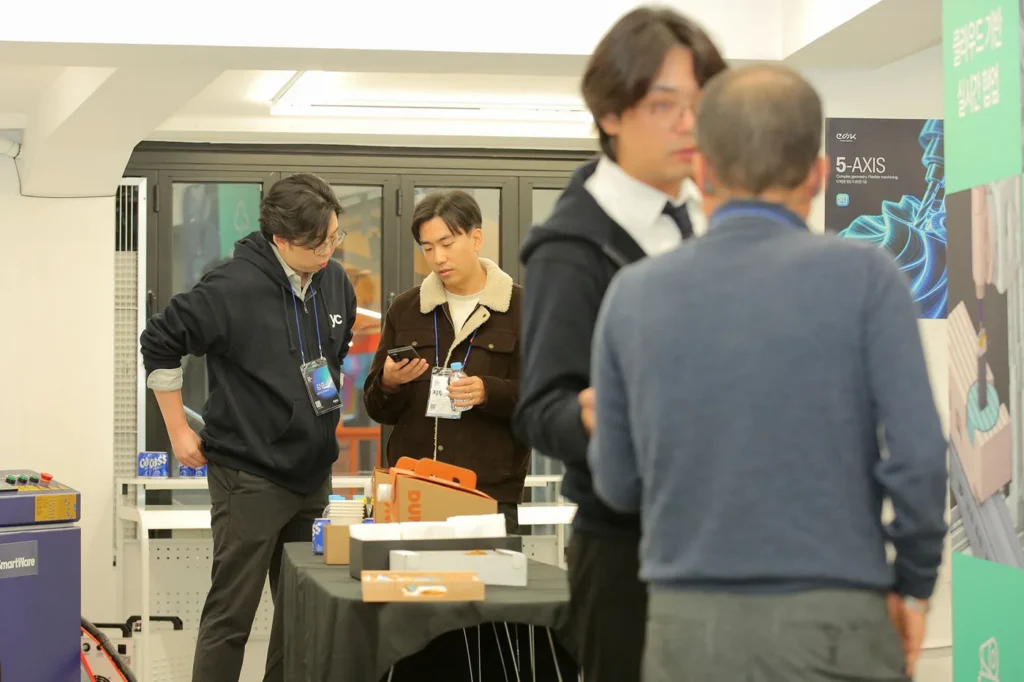
The day closed with recognition for Korean partners and further conversations over dinner. Thank you to YC Corporation for organizing the event, and to the customers and guests who brought their production challenges directly to the ENCY team.
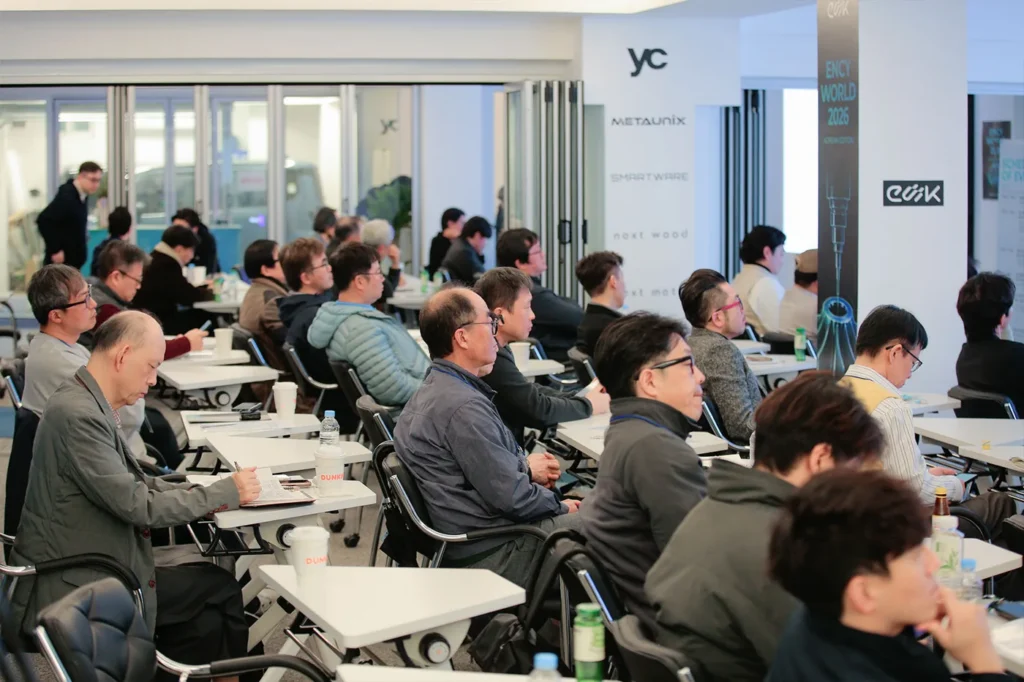
Watch the short event recap or view the full conference recording to see the presentations and demonstrations from Seoul.